Anaemia: New Insights and Prevention Strategies
Why in the News?
Recent research published in the European Journal of Clinical Nutrition challenges the long-standing belief that iron deficiency is the primary cause of anaemia in India.
Key Findings:
- Study Scope: Blood samples from 4,500 individuals across eight Indian states revealed:
- Only 9% of anaemia cases were due to iron deficiency.
- 22% of cases had unknown origins.
- Other Factors Identified: Anaemia was attributed to:
- Vitamin B12 deficiency
- Folate deficiency
- Hemoglobinopathies
- Air pollution
- Undetected blood loss
Policy Implications:
- Experts emphasize the need for diversified dietary interventions. A focus on fruits, vegetables, and dairy is recommended, rather than relying solely on iron supplementation.
Understanding Anaemia
Anaemia occurs when the blood lacks sufficient healthy red blood cells (RBCs) or hemoglobin to efficiently carry oxygen to tissues.
Impact:
- Anaemia can range from mild to severe.
- It often signals underlying health issues that require attention.
Symptoms:
- General Symptoms: Weakness, fatigue, and shortness of breath.
- Skin Changes: Pale or yellowish skin, more noticeable in lighter skin tones.
- Heart and Circulatory Symptoms: Irregular heartbeat, chest pain, and cold extremities.
- Neurological Effects: Dizziness, lightheadedness, and headaches.
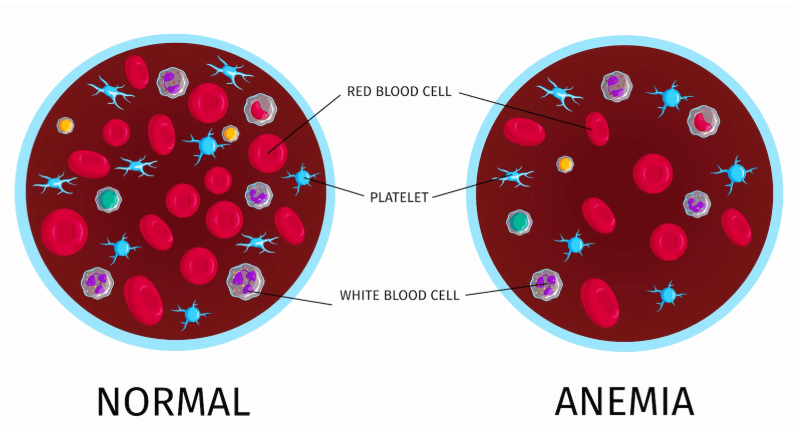
Causes of Anaemia
- Iron Deficiency:
- Inadequate iron levels reduce hemoglobin production, leading to fewer healthy RBCs.
- Vitamin Deficiency:
- Insufficient Vitamin B12 or folate intake or absorption can lead to anaemia.
- Chronic Diseases:
- Conditions like cancer, kidney disease, and autoimmune disorders may hinder RBC production.
- Bone Marrow Issues:
- Diseases such as leukemia impair blood cell formation.
- Inherited Disorders:
- Genetic conditions like sickle cell anaemia and thalassemia.
- Other Causes:
- Blood loss (e.g., ulcers or heavy menstruation).
- Environmental factors like air pollution.
Prevention Strategies
- Adopt a Balanced Diet:
- Include iron-rich foods such as meats, beans, and green leafy vegetables.
- Consume Vitamin B12 and folate-rich foods like dairy and fortified cereals.
- Enhance Iron Absorption:
- Pair iron-rich meals with Vitamin C sources like citrus fruits.
- Address Chronic Blood Loss:
- Seek medical advice for heavy menstrual bleeding or persistent conditions.
- Prioritize Prenatal Care:
- Pregnant individuals should take iron and folic acid supplements as prescribed.
Conclusion
Anaemia is a multifactorial condition that extends beyond iron deficiency. Addressing its root causes requires a comprehensive approach, including dietary diversification, environmental improvements, and enhanced healthcare access. These strategies can significantly improve overall public health outcomes.
Download the PREPP App and attempt FREE IAS Exam Mock Tests and get complete study material!
*The article might have information for the previous academic years, please refer the official website of the exam.
How likely are you to recommend Prepp.in to a friend or a colleague?
Not so likely
Highly likely
UPSC CSE (IAS) 2027 Prelims Mock Test Series
Live Quizzes
Quizzes
Live Tests
Free
• Live
Live Test : UPSC IAS : GS - Indian Geography - Subject Knowledge Test
35 Minutes
30 Questions
60 Marks
English, Hindi
Test will end in 02:26:01

• Live
Live Test : UPSC CSE Prelims CSAT (Paper-II) (Oct 08 - 11)
120 Minutes
80 Questions
200 Marks
English, Hindi
MEDIUM
Test will end on 11th Oct, 07:00 PM
Full Tests
Full Test - 04: UPSC CSE Prelims CSAT (Paper-II)
120 Minutes
80 Questions
200 Marks
English, Hindi
MEDIUM
Attempted by 19 aspirants in 12 hours
Full Test - 03: UPSC CSE Prelims CSAT (Paper-II)
120 Minutes
80 Questions
200 Marks
English, Hindi
MEDIUM
Attempted by 21 aspirants in 12 hours
Previous Year Papers
UPSC CSE Prelims 2026 GS Paper 1 Question Paper (24-May-2026)
120 Minutes
100 Questions
200 Marks
2,969 Attempted
English, Hindi
MEDIUM
Attempted by 13 aspirants in 12 hours
UPSC CSE Prelims 2026 CSAT Paper 2 Question Paper (24-May-2026)
120 Minutes
80 Questions
200 Marks
3,145 Attempted
English, Hindi
MEDIUM
Attempted by 13 aspirants in 12 hours
Videos

17 February 2025 | The Hindu Must Read Articles | Current Affairs
7,202 Views
•4
•7 months ago

16 February 2026 | The Hindu Must Read Articles | Current Affairs
6,962 Views
•4
•7 months ago

13 February 2026 | The Hindu Must Read Articles | Current Affairs
8,765 Views
•5
•7 months ago

12 February 2026 | The Hindu Must Read Articles | Current Affairs
5,788 Views
•4
•7 months ago






Also Check
IAS Exam Overview
IAS Exam Admit Card
IAS Exam Question Paper 2026
IAS Exam Mains Syllabus
IAS Exam Application Process
IAS Exam Eligibility
IAS Exam Result
IAS Exam Exam Pattern
IAS Exam CSAT Syllabus
IAS Exam Answer Key
IAS Exam Previous Year Paper
IAS Exam Current Affairs
IAS Exam Mains Question Paper
IAS Exam IAS Courses
IAS Exam UPSC Study Notes
IAS Exam Foundation Course 2024
IAS Exam Prelims Question Paper
IAS Exam Exam Center
IAS Exam Foundation Course 2025
IAS Exam Notification 2026
IAS Exam IAS Success Stories
IAS Exam Salary
IAS Exam Cutoff
IAS Exam Mock Tests
IAS Exam News


Comments