Albino Red-Bellied Turtle: A Rare Phenomenon
Why in the News?
In a remarkable event, an Albino Red-Bellied Turtle, native to Australia and New Guinea, was recently born in France. This rare occurrence has drawn attention to the unique traits and conservation challenges of this species.
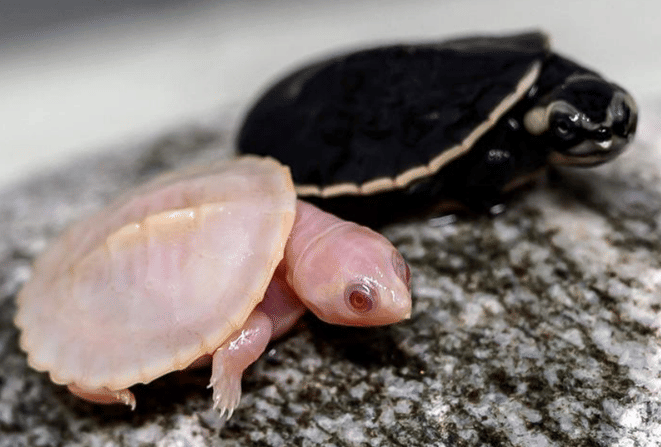
About the Red-Bellied Turtle
- Scientific Name: Emydura subglobosa
- Common Name: Red-Bellied Short-Necked Turtle
- The Red-Bellied Turtle is a hard-shelled aquatic species belonging to the family Chelidae. It is well-known for its vibrant red or pink belly, which adds to its appeal among turtle enthusiasts.
What is Albinism?
- Albinism is a congenital condition characterized by the absence of melanin, leading to:
- White or pale-colored hair, feathers, scales, or skin.
- Reddish-pink or blue eyes.
- Individuals with this condition are referred to as albinos, and their unique appearance often makes them highly sought after in the exotic pet trade.
Habitat and Distribution
Habitat
- The Red-Bellied Turtle thrives in freshwater environments, including:
- Rivers
- Swamps
- Lagoons
- Lakes
Geographic Distribution
- Northern Queensland, Australia
- Southern New Guinea
Characteristics and Behavior
- Vibrant Appearance: Known for its striking red or pink belly, the Red-Bellied Turtle is one of the most colorful members of the Chelidae family.
- Diet: These turtles are omnivorous, feeding on:
- Fish
- Plant matter
- Commercial turtle pellets (in captivity)
- Albino Turtles: Albino individuals are especially prized in the exotic pet trade due to their rarity and unique coloration.
Threats to Survival
Despite its "Least Concern" status on the IUCN Red List, the Red-Bellied Turtle faces several threats:
Habitat Destruction
- Urbanization and agriculture lead to the loss of natural freshwater habitats.
- Pollution from human activities further degrades these environments.
Illegal Trade
- The exotic pet trade targets albino turtles, increasing the risk of overexploitation.
Conservation Efforts
Conservation strategies are crucial to ensure the survival of this species. Measures include:
- Protecting freshwater habitats.
- Regulating the trade of albino turtles.
- Raising awareness about the ecological importance of the Red-Bellied Turtle.
Download the PREPP App and attempt FREE IAS Exam Mock Tests and get complete study material!
*The article might have information for the previous academic years, please refer the official website of the exam.
How likely are you to recommend Prepp.in to a friend or a colleague?
Not so likely
Highly likely
UPSC CSE (IAS) 2027 Prelims Mock Test Series
Live Quizzes
Quizzes
Live Tests

• Live
Live Test : UPSC CSE Prelims CSAT (Paper-II) (Oct 08 - 11)
120 Minutes
80 Questions
200 Marks
English, Hindi
MEDIUM
Test will end in 09:17:26
Full Tests
Full Test - 04: UPSC CSE Prelims CSAT (Paper-II)
120 Minutes
80 Questions
200 Marks
English, Hindi
MEDIUM
Attempted by 18 aspirants in 12 hours
Full Test - 03: UPSC CSE Prelims CSAT (Paper-II)
120 Minutes
80 Questions
200 Marks
English, Hindi
MEDIUM
Attempted by 20 aspirants in 12 hours
Previous Year Papers
UPSC CSE Prelims 2026 GS Paper 1 Question Paper (24-May-2026)
120 Minutes
100 Questions
200 Marks
2,986 Attempted
English, Hindi
MEDIUM
Attempted by 12 aspirants in 12 hours
UPSC CSE Prelims 2026 CSAT Paper 2 Question Paper (24-May-2026)
120 Minutes
80 Questions
200 Marks
3,163 Attempted
English, Hindi
MEDIUM
Attempted by 13 aspirants in 12 hours
Videos

17 February 2025 | The Hindu Must Read Articles | Current Affairs
7,202 Views
•4
•7 months ago

16 February 2026 | The Hindu Must Read Articles | Current Affairs
6,962 Views
•4
•7 months ago

13 February 2026 | The Hindu Must Read Articles | Current Affairs
8,765 Views
•5
•7 months ago

12 February 2026 | The Hindu Must Read Articles | Current Affairs
5,788 Views
•4
•7 months ago






Also Check
IAS Exam Overview
IAS Exam Admit Card
IAS Exam Question Paper 2026
IAS Exam Mains Syllabus
IAS Exam Application Process
IAS Exam Eligibility
IAS Exam Result
IAS Exam Exam Pattern
IAS Exam CSAT Syllabus
IAS Exam Answer Key
IAS Exam Previous Year Paper
IAS Exam Current Affairs
IAS Exam Mains Question Paper
IAS Exam IAS Courses
IAS Exam UPSC Study Notes
IAS Exam Foundation Course 2024
IAS Exam Prelims Question Paper
IAS Exam Exam Center
IAS Exam Foundation Course 2025
IAS Exam Notification 2026
IAS Exam IAS Success Stories
IAS Exam Salary
IAS Exam Cutoff
IAS Exam Mock Tests
IAS Exam News


Comments