Advocates (Amendment) Bill, 2025: Key Provisions, Controversies & Future Prospects
Why in the News?
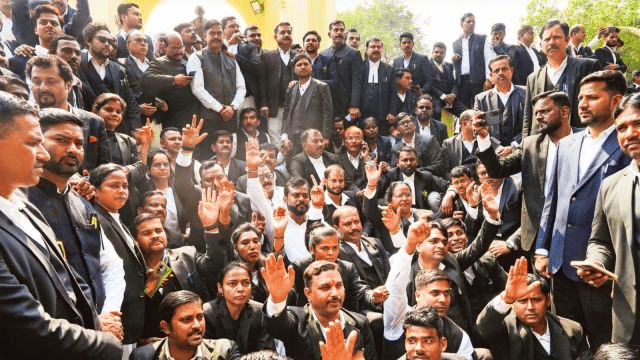
The Union Law and Justice Ministry has withdrawn the draft Advocates (Amendment) Bill, 2025, following strong opposition from lawyers and the Bar Council of India (BCI). The proposed amendments aimed to modernize the legal profession but faced backlash over concerns about government interference and professional autonomy.
Background of the Advocates (Amendment) Bill, 2025
- The draft Bill was released on February 13, 2025, and open for public consultation until February 28, 2025.
- Proposed amendments sought to update the Advocates Act, 1961, aligning it with modern legal practices and global standards.
- The Bar Council of India (BCI) opposed provisions allowing government oversight in its operations.
- Lawyers across India protested against perceived threats to their independence and professional rights.
The Advocates Act, 1961: Why Amendments Were Proposed?
Historical Context
- The Advocates Act, 1961, established a regulatory framework for legal practitioners in India.
- It created the Bar Council of India (BCI) and State Bar Councils to oversee legal education, professional conduct, and ethics.
Need for Reform
- Since 1961, legal education and practice have evolved, necessitating reforms.
- The amendments aimed to:
- Expand the definition of legal practitioners beyond advocates and vakils.
- Introduce mandatory Bar Association registration for better regulation.
- Modernize legal education to match global best practices.
Major Amendments Proposed in the Bill
1. Expansion of Legal Practitioner Definition
- The Bill broadens Section 2 to include corporate lawyers, in-house counsels, and foreign law firms.
- Earlier, the term applied only to advocates, vakils, pleaders, mukhtars, and revenue agents.
2. Mandatory Bar Association Registration
- New Section 33A: All advocates must register with a Bar Association where they primarily practice.
- Lawyers changing their field or location must notify their previous Bar Association within 30 days.
- Advocates can now vote in only one Bar Association.
3. Prohibition of Strikes and Boycotts
- Section 35A bans indefinite strikes but permits symbolic protests that do not disrupt court proceedings.
- Violations may lead to disciplinary actions and professional misconduct charges.
4. Government Oversight and Regulation
- The Central Government may nominate up to three members to the BCI.
- Section 49B grants the government powers to direct the BCI in implementing legal regulations.
5. Stricter Disciplinary Measures & Misconduct Liabilities
- Section 45: Unauthorized practice now carries imprisonment up to one year and a fine up to ₹2 lakh.
- Section 45B: Clients can file complaints against advocates for professional misconduct.
- Section 24B: Advocates convicted of crimes carrying three years or more imprisonment will be removed from the State Bar Council roll.
- Mandatory verification of an advocate’s credentials, degrees, and practice locations.
6. Legal Education & Professional Training Reforms
- Bar Examination Requirement (Section 2): Reinforces the need for clearing the All-India Bar Examination before full practice rights are granted.
- Mandatory pre- and post-enrollment training programs under BCI regulation.
- Women Representation in BCI: At least two female members to be co-opted into the Bar Council of India.
- Regulation of Foreign Law Firms: A framework to govern the entry and operations of foreign law firms in India.
Major Criticisms of the Advocates (Amendment) Bill, 2025
1. Threat to BCI Autonomy
- Government-appointed members could undermine the independence of the Bar Council.
- The BCI chairperson claimed the bill deviated from previously agreed terms.
2. Suppression of Lawyers’ Rights
- The prohibition on strikes was seen as an attack on lawyers' rights to protest against judicial and legal system issues.
3. Concerns Over Foreign Law Firms
- Indian lawyers worry that foreign law firms may dominate the legal market, creating an uneven playing field.
4. Overregulation and Potential Misuse
- Enhanced disciplinary powers could be misused to suppress opposition within the bar.
Way Forward: Recommendations for a Balanced Approach
1. Ensuring Stakeholder Consensus
- The government should engage in nationwide consultations with BCI and legal professionals before reintroducing the Bill.
2. Preserving the Independence of the Bar
- Instead of government nominees, an independent oversight committee of senior advocates, retired judges, and legal scholars could regulate the bar council.
3. Balanced Regulation on Strikes
- A structured mediation mechanism can be introduced to resolve disputes between lawyers and the judiciary.
- Inspired by the UK's Bar Standards Board, India could implement a Legal Ombudsman System for grievances.
4. Clarity on Foreign Lawyers’ Entry
- A phased approach could allow foreign lawyers to initially offer advisory services before full-fledged practice.
- A reciprocity clause should ensure Indian lawyers have equal rights in foreign jurisdictions.
5. Strengthening Legal Education and Professional Standards
- Implementing a Continuous Professional Development (CPD) system, like in Canada, can help lawyers stay updated.
6. Transparency in Bar Association Registration
- A centralized, digital tracking system can streamline advocate registration and verification.
Conclusion
The Advocates (Amendment) Bill, 2025, aimed at modernizing India's legal profession, has sparked significant debate. While reforms are necessary to keep up with global trends, maintaining the independence of the Bar Council, ensuring fair regulations, and addressing lawyer concerns are essential. A balanced and consultative approach can lead to effective and widely accepted legal reforms.
Download the PREPP App and attempt FREE IAS Exam Mock Tests and get complete study material!

Live Test : UPSC CSE Prelims CSAT (Paper-II) (Oct 08 - 11)
Full Test - 04: UPSC CSE Prelims CSAT (Paper-II)
Full Test - 03: UPSC CSE Prelims CSAT (Paper-II)
UPSC CSE Prelims 2026 GS Paper 1 Question Paper (24-May-2026)
UPSC CSE Prelims 2026 CSAT Paper 2 Question Paper (24-May-2026)

17 February 2025 | The Hindu Must Read Articles | Current Affairs

16 February 2026 | The Hindu Must Read Articles | Current Affairs

13 February 2026 | The Hindu Must Read Articles | Current Affairs









Comments