Accredited Social Health Activist (ASHA) Workers' Protest in Kerala: Issues, Impact & Role in Healthcare
Why in the News?
A section of Accredited Social Health Activist (ASHA) workers in Kerala has been protesting outside the state Secretariat in Thiruvananthapuram, demanding a wage hike and improved social security benefits. The protest highlights the ongoing struggles of frontline health workers under the National Health Mission (NHM).
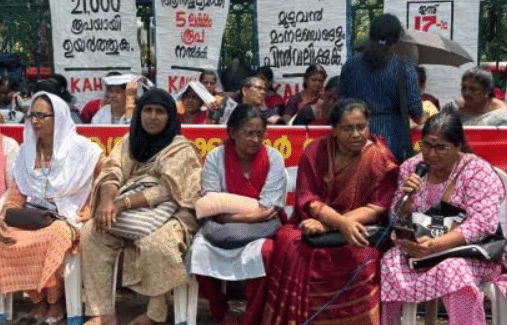
Understanding the ASHA Workers' Protest
Who are the Protesters?
- ASHA workers serve as community health volunteers under the Ministry of Health and Family Welfare (MoHFW) as part of India's National Rural Health Mission (NRHM). They play a crucial role in delivering essential healthcare services at the grassroots level.
Reasons Behind the Protest
- Low Honorariums: ASHA workers receive fixed honorariums of Rs 4,000 per month, with performance-based incentives. Many workers argue that this is insufficient.
- Delayed Payments: Irregular and delayed payments have been a persistent issue.
- Lack of Social Security Benefits: ASHA workers demand benefits such as pension, insurance, and other welfare measures.
Political Angle & Government Response
- The CPI(M) government in Kerala has criticized the protest, alleging external influences.
- Opposition parties, including the Congress and other labor organizations, have extended support to the protesters.
- Similar movements, such as the 2015 tea estate workers’ protest in Munnar, have set precedents for worker agitation in Kerala.
Impact on Kerala’s Healthcare Services
- ASHA workers play a pivotal role in community health initiatives, and their absence has reportedly affected healthcare services.
- Delays in maternal and child healthcare, immunization programs, and disease prevention efforts have raised concerns among healthcare professionals.
Who are ASHA Workers? Role & Responsibilities
ASHA workers are a key component of India’s public healthcare system. Their responsibilities include:
1. Health Awareness & Education
- Spreading awareness on sanitation, hygiene, and preventive healthcare.
- Educating communities about communicable and non-communicable diseases.
2. Maternal & Child Healthcare
- Encouraging institutional deliveries to reduce maternal mortality.
- Ensuring antenatal and postnatal care for mothers.
- Supporting immunization programs to curb childhood diseases.
3. Basic Medical Assistance
- Providing first aid and essential medicines.
- Promoting family planning measures.
4. Community Mobilization
- Assisting in village health planning.
- Improving accessibility to government healthcare programs.
ASHA Workers’ Selection Criteria
To qualify as an ASHA worker, candidates must meet certain criteria:
- Local Representation: Must be a resident of the village they serve.
- Marital Status: Preference is given to married, widowed, or divorced women to ensure long-term commitment.
- Educational Qualification: Minimum 10th-grade education, with flexibility in rural areas.
ASHA Workers’ Salary, Benefits & Challenges
Despite being categorized as volunteers, ASHA workers receive performance-based incentives:
- Fixed Honorarium: Rs 4,000 per month.
- Additional Incentives: Rs 5,000 to Rs 8,000 based on performance.
- COVID-19 Bonus: Extra incentives for pandemic-related duties.
However, their lack of formal employment status denies them basic labor rights like pension, paid leave, and social security.
Monitoring & Evaluation of ASHA Programs
To ensure effectiveness, ASHA workers undergo regular monitoring:
- Community Monitoring: Conducted at the village level to track health outcomes.
- District-Level Surveys: Help set decentralized healthcare goals.
Conclusion: The Need for Policy Reforms
The ongoing ASHA workers’ protest in Kerala underscores the urgent need for fair wages, timely payments, and social security benefits. Given their indispensable role in public healthcare, policymakers must address their demands to ensure the sustainability of community healthcare services in India.
Download the PREPP App and attempt FREE IAS Exam Mock Tests and get complete study material!

Live Test : UPSC CSE Prelims CSAT (Paper-II) (Oct 08 - 11)
Full Test - 04: UPSC CSE Prelims CSAT (Paper-II)
Full Test - 03: UPSC CSE Prelims CSAT (Paper-II)
UPSC CSE Prelims 2026 GS Paper 1 Question Paper (24-May-2026)
UPSC CSE Prelims 2026 CSAT Paper 2 Question Paper (24-May-2026)

17 February 2025 | The Hindu Must Read Articles | Current Affairs

16 February 2026 | The Hindu Must Read Articles | Current Affairs

13 February 2026 | The Hindu Must Read Articles | Current Affairs









Comments