2023 Caste-Based Census of Bihar: An Analysis
![caste based census specification]() Why in the News?
Why in the News?
 Why in the News?
 The anticipated 2025 Census exercise has reignited calls for the inclusion of caste-based criteria akin to Bihar’s groundbreaking caste census. Here’s an in-depth analysis:
Caste-Based Census in India
- Historical Context
- Since 1951, Scheduled Castes (SCs) and Scheduled Tribes (STs) have been documented, while Other Backward Classes (OBCs) remain unenumerated.
- SECC and Its Purpose
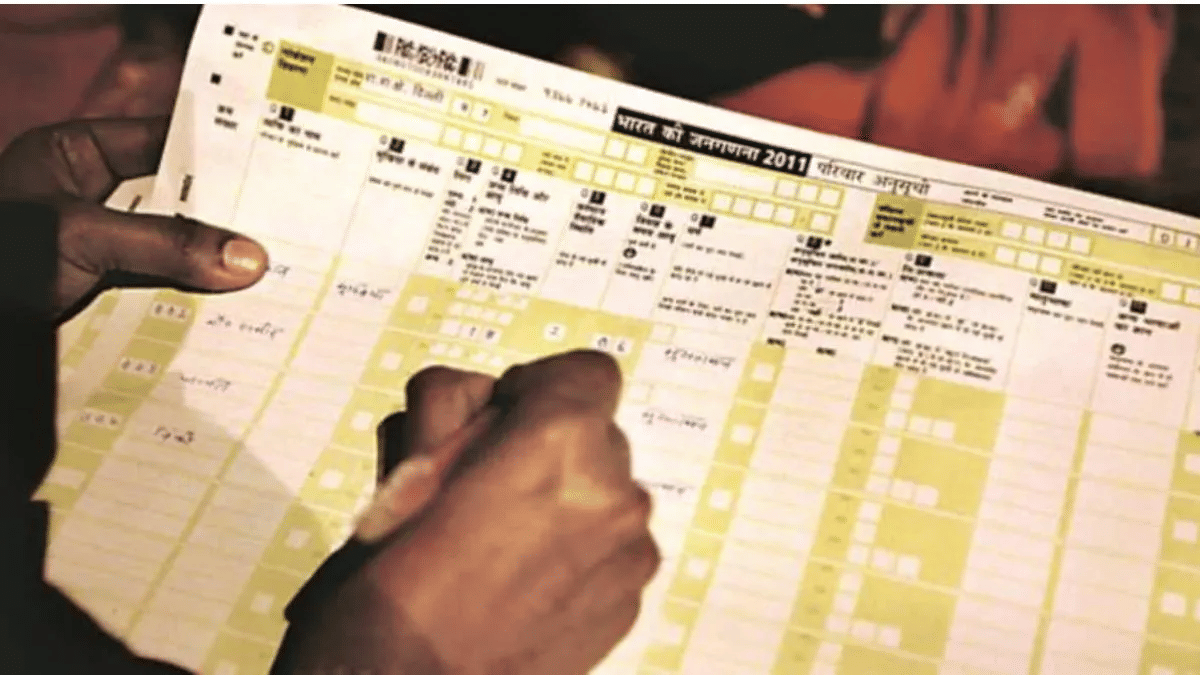
- The Socio-Economic and Caste Census (SECC) 2011 aimed to comprehensively record economic and caste data, but its caste-specific findings were never disclosed.
- Caste and Census Evolution
- India’s census primarily aids socio-economic planning and policymaking. Incorporating caste data could refine these functions but remains contentious.
- Current Debate
- Proponents advocate caste census for equitable policy-making. Critics argue it risks reinforcing divisive identities.
Need for a Caste-Based Census in India
- Addressing Social Inequality
- Accurate caste data is vital to combat caste-based discrimination and uplift marginalized groups.
- Equitable Resource Distribution
- Targeted resource allocation becomes feasible with precise OBC data.
- Evaluating Affirmative Action
- Measuring the impact of reservations requires robust caste data for recalibration.
- Comprehensive Societal Understanding
- A caste census provides deeper insights into societal dynamics and economic disparities.
- Political and Electoral Implications
- Understanding caste demographics aids in formulating inclusive political strategies.
Constitutional and Legal Provisions
- Article 14 & Article 21
- Ensuring equality and liberty, a caste census aligns with India’s constitutional vision of social justice.
- Article 340
- Provides for commissions to investigate the status of backward classes and suggest measures for their advancement.
- Census Act, 1948
- Regulates data collection but requires stronger enforcement mechanisms to ensure accuracy.
- Section 11(d): Penalizes individuals providing false data, but fines are minimal and lack deterrent value.
Bihar’s Caste Census
Key Milestones
- Initiated by the Bihar government to address demands from marginalized communities.
- Findings released on October 2, 2023, revealing critical socio-economic and caste demographics.
Methodology
- Two-Phase Approach: Household enumeration followed by socio-economic data collection.
- Technology Integration: Use of tablets and apps streamlined data gathering.
- Extensive Workforce: Thousands of enumerators and supervisors ensured thorough coverage.
- Verification Mechanisms: Multi-layer checks minimized discrepancies.
Key Findings of Bihar’s Caste Census
- Population Insights
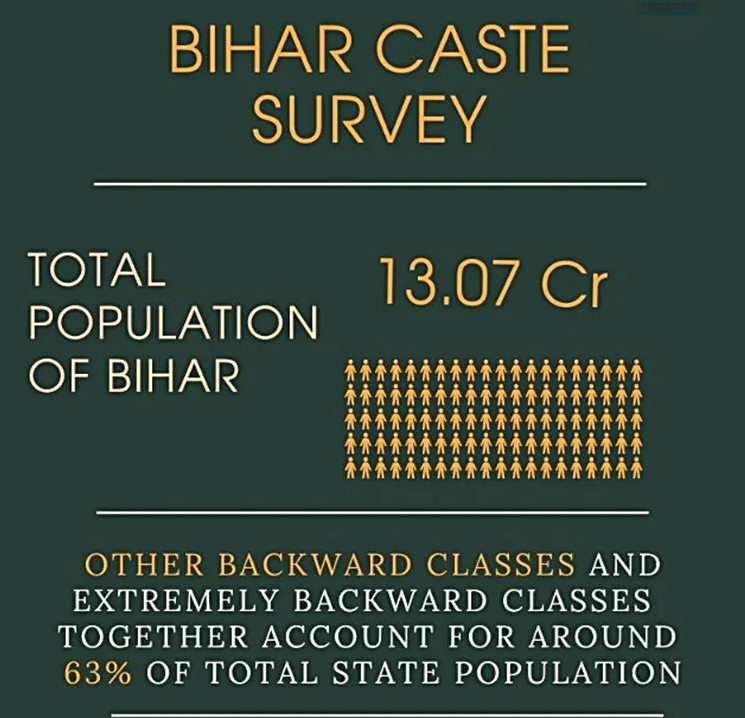
- Total Population: 13.07 crore.
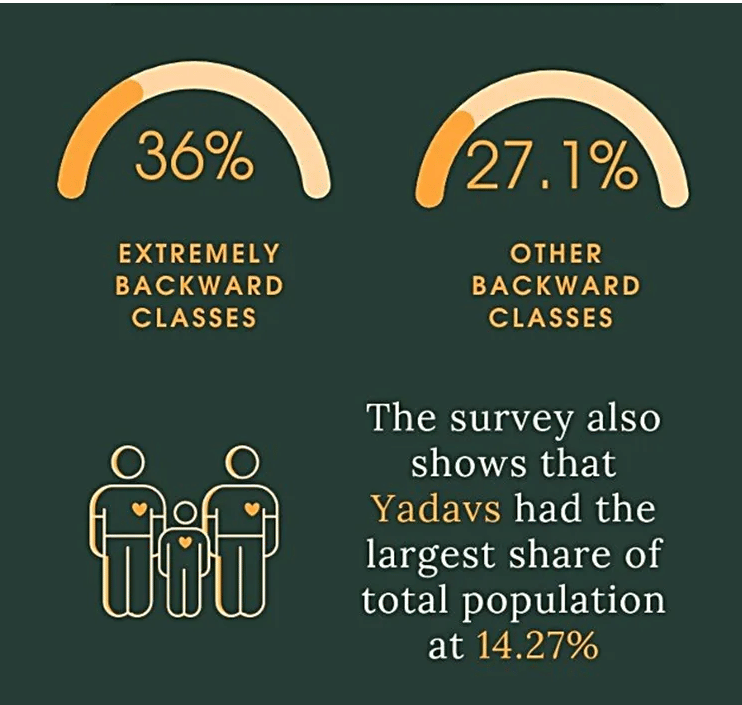
- OBCs: 63.14% (Backward Classes: 27.12%; Extremely Backward Classes: 36.01%).
- SCs: 19.65%, STs: 1.68%, General: 15.52%.
- Economic Indicators
- Over 63% of families earn less than ₹10,000 monthly.
- Among OBCs, 33.16% are poor; SCs: 42.93%, STs: 42.7%.
- Educational Gaps
- Less than 10% complete higher secondary education; under 1% achieve postgraduate degrees.
- Employment Trends
- Government jobs among OBCs dominated by Yadavs; Kayasths lead in the General category.
- Asset Ownership
- 95.5% own vehicles, but only 0.44% own four-wheelers.
Major Takeaways
- OBC & EBC Dominance: Together, they constitute 63% of the population.
- Economic Disparities: SCs and STs face higher poverty levels.
- Educational Inequality: Widespread gaps in higher education attainment.
- Income Inequality: A significant proportion earns below the poverty line.
Political Implications of Bihar’s Caste Census
- National Debate: Opposition parties demand nationwide caste census based on Bihar’s model.
- Vote Bank Politics: Strengthened calls for proportional representation.
- Policy Pressure: Increased focus on caste-based policies at the national level.
Criticism and Challenges
- Reinforcing Divisions
- Critics argue caste enumeration perpetuates societal divides.
- Data Reliability
- Historical inaccuracies in census data undermine credibility.
- Political Manipulation
- Potential misuse of caste data for electoral gains.
- Logistical Challenges
- Conducting such a census demands immense resources and coordination.
Way Forward
- Strengthen Legal Frameworks: Amend Census Act to deter data manipulation and introduce independent audits.
- Leverage Technology: Digital tools for data collection and validation ensure transparency.
- National Rollout: Extend Bihar’s model nationwide for comprehensive data.
- Awareness Campaigns: Educate the public on the significance of accurate reporting.
- Refined Policies: Use findings to enhance affirmative action and resource distribution.
- Global Learnings: Adapt best practices from international models while respecting India’s socio-cultural dynamics.
- Collaborative Governance: Involve diverse stakeholders for consensus-driven implementation.
Download the PREPP App and attempt FREE IAS Exam Mock Tests and get complete study material!
*The article might have information for the previous academic years, please refer the official website of the exam.
How likely are you to recommend Prepp.in to a friend or a colleague?
Not so likely
Highly likely
UPSC CSE (IAS) 2027 Prelims Mock Test Series
Live Quizzes
Quizzes
Live Tests

• Live
Live Test : UPSC CSE Prelims CSAT (Paper-II) (Oct 08 - 11)
120 Minutes
80 Questions
200 Marks
English, Hindi
MEDIUM
Test will end in 05:31:03
Full Tests
Full Test - 04: UPSC CSE Prelims CSAT (Paper-II)
120 Minutes
80 Questions
200 Marks
English, Hindi
MEDIUM
Attempted by 19 aspirants in 12 hours
Full Test - 03: UPSC CSE Prelims CSAT (Paper-II)
120 Minutes
80 Questions
200 Marks
English, Hindi
MEDIUM
Attempted by 20 aspirants in 12 hours
Previous Year Papers
UPSC CSE Prelims 2026 GS Paper 1 Question Paper (24-May-2026)
120 Minutes
100 Questions
200 Marks
2,989 Attempted
English, Hindi
MEDIUM
Attempted by 12 aspirants in 12 hours
UPSC CSE Prelims 2026 CSAT Paper 2 Question Paper (24-May-2026)
120 Minutes
80 Questions
200 Marks
3,167 Attempted
English, Hindi
MEDIUM
Attempted by 13 aspirants in 12 hours
Videos

17 February 2025 | The Hindu Must Read Articles | Current Affairs
7,202 Views
•4
•7 months ago

16 February 2026 | The Hindu Must Read Articles | Current Affairs
6,962 Views
•4
•7 months ago

13 February 2026 | The Hindu Must Read Articles | Current Affairs
8,765 Views
•5
•7 months ago

12 February 2026 | The Hindu Must Read Articles | Current Affairs
5,788 Views
•4
•7 months ago






Also Check
IAS Exam Overview
IAS Exam Admit Card
IAS Exam Question Paper 2026
IAS Exam Mains Syllabus
IAS Exam Application Process
IAS Exam Eligibility
IAS Exam Result
IAS Exam Exam Pattern
IAS Exam CSAT Syllabus
IAS Exam Answer Key
IAS Exam Previous Year Paper
IAS Exam Current Affairs
IAS Exam Mains Question Paper
IAS Exam IAS Courses
IAS Exam UPSC Study Notes
IAS Exam Foundation Course 2024
IAS Exam Prelims Question Paper
IAS Exam Exam Center
IAS Exam Foundation Course 2025
IAS Exam Notification 2026
IAS Exam IAS Success Stories
IAS Exam Salary
IAS Exam Cutoff
IAS Exam Mock Tests
IAS Exam News


Comments