
Disconformity Geology Explained
A disconformity represents a significant interruption in the geological record, specifically an erosional surface between parallel sedimentary rock layers. This signifies a period where deposition ceased, and existing rocks were eroded before new sediments were deposited on top, with deposition resuming in parallel orientation.
Analyzing Disconformity Characteristics
Let's examine the key features defining a disconformity:
- Parallel Strata: The most defining characteristic is that the sedimentary layers (strata) situated both below and above the erosional surface maintain a parallel orientation, typically horizontal.
- Erosional Surface: There is a clear surface indicating erosion has occurred, removing some rock material and time from the geological sequence.
- Gap in Record: This unconformity represents missing geological time and potentially eroded rock layers.
Evaluating the Options
Based on the definition, we evaluate the options provided:
- Option 1 describes a nonconformity (igneous rocks below sedimentary) or potentially an angular unconformity, not a disconformity.
- Option 2 contradicts the definition of any unconformity, including a disconformity.
- Option 3 accurately describes a disconformity. The strata below and above the erosional surface are horizontal, indicating parallel deposition despite the erosional gap.
- Option 4 describes an angular unconformity, where the lower strata are tilted relative to the overlying horizontal strata.
Therefore, the statement that accurately describes a disconformity is when the strata below and above an erosional surface are horizontal.
Important Questions from Principles Of Stratigraphy
- Which one of the following molecules is the most buoyant in the atmosphere?
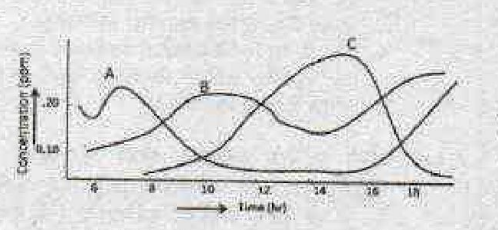
In the above diagram, A, B and C represent, respectively, the tropospheric concentrations of
- Oxygen atom required to form tropospheric ozone comes from
- Atmospheric layers where convection takes place are
Radiocarbon, used for dating sediments, is produced at the top of the Earth's atmosphere by the


