Cell Membrane Properties: Identifying the False Statement
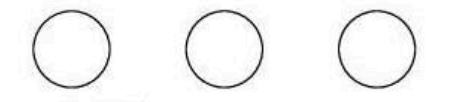
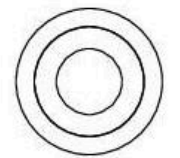
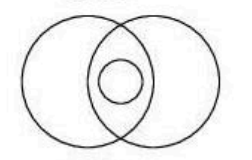
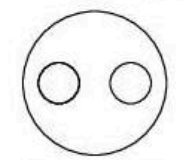
The question asks to identify the statement that is incorrect regarding the cell membrane. Let's analyze each option:
-
Statement 1: Phospholipid is an amphipathic molecule
This statement is true. Amphipathic molecules have both hydrophilic (water-loving) and hydrophobic (water-fearing) parts.
-
Statement 2: Phospholipid has both a hydrophilic region and a hydrophobic region
This statement is also true. The phosphate head of a phospholipid is hydrophilic, while the fatty acid tails are hydrophobic. This is the basis of the cell membrane's structure.
-
Statement 3: Membrane proteins can reside in phospholipid bilayer with their hydrophilic regions protruding
This statement is true. Many membrane proteins are partially or fully embedded in the bilayer. Their hydrophilic parts often interact with the aqueous environment inside and outside the cell, while hydrophobic parts interact with the lipid tails.
-
Statement 4: Carbohydrates are totally absent in the cell membrane
This statement is false. Carbohydrates are typically found on the outer surface of the plasma membrane, forming a layer called the glycocalyx. They are usually attached to proteins (forming glycoproteins) or lipids (forming glycolipids).
Therefore, the statement that is not true for the cell membrane is that carbohydrates are totally absent.
Similar Questions
- Consider the Earth to be a blackbody with an average temperature of $15^\circ\text{C}$. Find out the wavelength ($\lambda_{max}$) at which maximum power is radiated :
- Given below are two statements : one is labelled as Assertion (A) and the other is labelled as Reason (R).
Assertion (A) : Under adiabatic conditions, a moist air parcel cools slowly and rises to greater height in atmosphere compared to a dry air parcel.
Reason (R) : Compared to dry air parcel, latent heat of condensation released within the moist air parcel reduces rate of cooling of the moist air parcel moving up under adiabatic conditions.
In the light of the above statements, choose the most appropriate answer from the options given below : - Arrange the following elements on increasing order of their mass (weight) percentage in the Bulk earth :
A. Iron
B. Silicon
C. Oxygen
D. Magnesium
E. Nickel
Choose the correct answer from the options given below : - Arrange the following Epochs of Cenozoic era starting from recent one to older one :
A. Paleocene
B. Pliocene
C. Oligocene
D. Holocene
E. Eocene
Choose the correct answer from the options given below : - Arrange following rock types from high grade to low grade metamorphism :
A. Slate
B. Gneiss
C. Schist
D. Shale
E. Phyllite
Choose the correct answer from the options given below : - Arrange the following Seismic discontinuities based on their depth of occurrence from shallow to deeper :
A. Conrad discontinuity
B. Repetti discontinuity
C. Gutenberg discontinuity
D. Lehman discontinuity
E. Mohorovicic discontinuity
Choose the correct answer from the options given below : - Match List - I with List - II.
List - I (Decomposition Processes) List - II (Function) A. Leaching I. Degradation of humus by microbes to release inorganic nutrients B. Catabolism II. Accumulation of a colloidal dark coloured amorphous substance, which is a reservoir of nutrients C. Humification III. Bacterial and Fungal enzymes degrade detritus into simpler inorganic substances D. Mineralization IV. Water soluble inorganic nutrients go down into the soil and get precipitated
Choose the correct answer from the options given below : - Choose the correct statements :
A. Both hardness and Alkalinity are measured in units of mg/L as $\text{CaCO}_3$
B. Enrichment of C and S are responsible for eutrophication of lakes
C. Alkalinity is a base neutralizing capacity
D. Dissolved ions increases salinity of water
E. Turbidity is a measure of transparency of water
Choose the most appropriate answer from the options given below : - Arrange the following materials in decreasing order of their porosity (percentage of total volume of material that consists of pore spaces) :
A. Sand
B. Clay
C. Gravel
D. Sandstone (Semi consolidated)
Choose the correct answer from the options given below : - Which of the following are examples of Igneous rocks ?
A. Batholiths
B. Stock
C. Argillacous
D. Gneiss
E. Zeolite
Choose the correct answer from the options given below :
Important Questions from Mixed Topic (CUET PG)
- Kalpsutra, the illustrated canonical text is from:-
- The Harappan city almost exclusively devoted to craft production was-:
- Mohandas Karamchand Gandhi launched quit India movement after the failure of:-
- The "Objectives Resolution" was introduced in constituent assembly by:-
- Who among the following was not a member of the constituent assembly:-