
Which figure comes next in the series?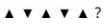

To solve this problem, we need to identify the pattern in the sequence of shapes provided in the series and figure out which option logically follows next. Let's analyze the given series:
The series shows a repeating pattern of upward and downward triangles. The sequence is as follows:
- Upward Triangle (▲)
- Downward Triangle (▼)
- Upward Triangle (▲)
- Downward Triangle (▼)
- Upward Triangle (▲)
From the sequence, we can deduce that the triangles alternate between upward and downward orientations. Following this pattern:
- The next triangle should be a downward triangle (▼) since the pattern alternates direction with each successive triangle.
Therefore, the next figure in the series should be a downward triangle (▼).
Conclusion: The correct option that represents the next figure in the series is:
Similar Questions
- A bag has 4 fair coins (1 head 1 tail) and 4 double-headed coins. A coin is drawn and flipped 3 times all heads. Probability it's double-headed?
- Which two signs and two numbers should be interchanged in the equation given below to make the following equation correct?
\(10+4-5\times2=19\) If \(+\) means \(\times\), \(\div\) means- , - means \(\div\) then, and \(\times\) means \(+\), then
what is \(150\times25-5\div10+2\)?Criteria to be selected as Field Officer (as on 01-01-2024):
Graduate in Agriculture or Environmental Science with at least 65% marks.
Age between 23 and 35 years.
Must have a valid driving license.
Should have field experience of at least 2 years.
Special Clause:
If candidate has no driving license but more than 4 years of field experience, refer to Regional Head.
Case:
Shalini is 29 years old, has 68% in Environmental Science, 5 years of field work, but does not hold a driving license.
Question: What should be done in Shalini's case?Criteria to be selected as Lab Assistant (as on 01-03-2024):
Must have a Diploma in Lab Technology with at least 60% marks.
Age must be 21 to 28 years.
Should have minimum 1 year practical lab experience.
Must be willing to work in night shifts.
Special Clause:
If the candidate has 70% in Diploma but only 6 months of experience, refer to Chief Lab Supervisor.
Case:
Irfan is 22 years old, has 72% in Lab Diploma, 6 months of experience, and agrees to night shifts.
Question: What should be done in Irfan's case?- A bag has 4 red and 6 blue balls. What is the probability of drawing a red ball?
Important Questions from Probability
- A fair coin is tossed 6 times. The probability of getting at least 5 heads is _________________. (rounded off to two decimal places)
- Consider a random experiment of rolling a fair die. The probability of getting an odd number or a number less than 4 is ______ (Rounded off to two decimal places).
- In a null hypothesis significance test, the significance level $\alpha$ was set to 0.01. For which one or more of the following $p$ values would the null hypothesis be rejected?
In a population of birds, the proportion of blue individuals is 0.4 and the proportion of males is 0.3. Assuming that colour and sex are independent of each other, the probability that a randomly sampled individual from this population is a blue male is ______
(Round off to two decimal places)
Consider a case where two identical six-faced fair dice are rolled simultaneously.
The probability of getting even numbers in both AND a sum equal to 5 and above is ______ (rounded off to two decimal places).



