What is the value of equivalent resistance if the resistor 10 Ω is parallel to 20 Ω?
Calculating Equivalent Resistance in Parallel
When resistors are connected in parallel, the current has multiple paths to flow through. The equivalent resistance of a parallel combination is always less than the smallest individual resistance in the combination.
For two resistors, \(R_1\) and \(R_2\), connected in parallel, the equivalent resistance \(R_{eq}\) is calculated using the formula:
\[ \frac{1}{R_{eq}} = \frac{1}{R_1} + \frac{1}{R_2} \]
This formula can be rearranged to find \(R_{eq}\) directly:
\[ R_{eq} = \frac{R_1 \times R_2}{R_1 + R_2} \]
In this question, we are given two resistors connected in parallel:
- \(R_1 = 10 \, \Omega\)
- \(R_2 = 20 \, \Omega\)
Let's use the formula to find the equivalent resistance.
Steps to Find Parallel Equivalent Resistance
Substitute the given values into the formula:
\[ R_{eq} = \frac{10 \, \Omega \times 20 \, \Omega}{10 \, \Omega + 20 \, \Omega} \]
First, calculate the product in the numerator:
\[ 10 \times 20 = 200 \, \Omega^2 \]
Next, calculate the sum in the denominator:
\[ 10 + 20 = 30 \, \Omega \]
Now, divide the numerator by the denominator:
\[ R_{eq} = \frac{200 \, \Omega^2}{30 \, \Omega} \]
\[ R_{eq} = \frac{200}{30} \, \Omega \]
Simplify the fraction:
\[ R_{eq} = \frac{20}{3} \, \Omega \]
Convert the fraction to a decimal:
\[ \frac{20}{3} \approx 6.6667 \, \Omega \]
Rounding the result to two decimal places, we get \(6.67 \, \Omega\).
Therefore, the equivalent resistance of a 10 Ω resistor and a 20 Ω resistor connected in parallel is approximately \(6.67 \, \Omega\).
Important Questions from Series and Parallel Connection of Resistance
How much resistance must be connected in parallel with a 360 Ω resistor to obtain an equivalent resistance Req of 120 Ω?
If n identical resistance, each of resistance R, are connected in parallel, the equivalent resistance is:
Three resisters of 3 ohm, 10 ohm and 15 ohm are connected in parallel in a 30 V circuit. The current will that flow through the 3-ohm resistor is:
- In which combination, the electrical appliances are connected at home?
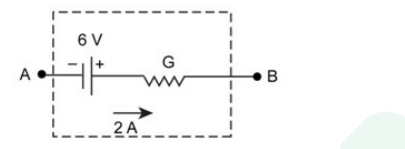
For the figure shown below, find the value of conductance 'G' (in S).