Three resisters of 3 ohm, 10 ohm and 15 ohm are connected in parallel in a 30 V circuit. The current will that flow through the 3-ohm resistor is:
10 A
When resistors are connected in parallel in a circuit, the voltage across each resistor is the same and is equal to the total voltage supplied by the source. In this problem, three resistors with resistances of 3 ohm, 10 ohm, and 15 ohm are connected in parallel to a 30 V circuit.
We need to find the current that flows specifically through the 3-ohm resistor. To do this, we can use Ohm's Law, which relates voltage (V), current (I), and resistance (R).
Understanding Ohm's Law for Current Calculation
Ohm's Law is given by the formula:
\(V = IR\)
Where:
- \(V\) is the voltage across the resistor (in volts)
- \(I\) is the current flowing through the resistor (in amperes)
- \(R\) is the resistance of the resistor (in ohms)
To find the current (\(I\)) flowing through a specific resistor, we can rearrange the formula to:
\(I = \frac{V}{R}\)
Calculating Current Through the 3-Ohm Resistor
Since the resistors are in parallel, the voltage across the 3-ohm resistor is the same as the total circuit voltage, which is 30 V.
We have:
- Voltage across the 3-ohm resistor (\(V\)) = 30 V
- Resistance of the 3-ohm resistor (\(R\)) = 3 ohm
Using Ohm's Law (\(I = \frac{V}{R}\)), we can calculate the current flowing through the 3-ohm resistor:
\(I_{3\Omega} = \frac{V}{R_{3\Omega}}\)
\(I_{3\Omega} = \frac{30 \, V}{3 \, \Omega}\)
\(I_{3\Omega} = 10 \, A\)
Therefore, the current that will flow through the 3-ohm resistor is 10 A.
Summary of Resistances and Current Calculation
| Resistor Resistance | Voltage Across Resistor | Current Through Resistor (Calculated) |
|---|---|---|
| 3 ohm | 30 V | 10 A |
| 10 ohm | 30 V | \(I_{10\Omega} = \frac{30 V}{10 \Omega} = 3 A\) |
| 15 ohm | 30 V | \(I_{15\Omega} = \frac{30 V}{15 \Omega} = 2 A\) |
The total current drawn from the source would be the sum of the currents through each parallel branch: \(10 A + 3 A + 2 A = 15 A\).
The current flowing specifically through the 3-ohm resistor is 10 A.
Important Questions from Series and Parallel Connection of Resistance
How much resistance must be connected in parallel with a 360 Ω resistor to obtain an equivalent resistance Req of 120 Ω?
If n identical resistance, each of resistance R, are connected in parallel, the equivalent resistance is:
- What is the value of equivalent resistance if the resistor 10 Ω is parallel to 20 Ω?
- In which combination, the electrical appliances are connected at home?
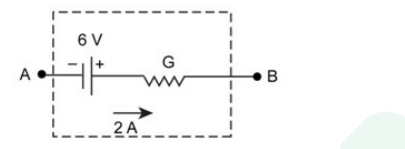
For the figure shown below, find the value of conductance 'G' (in S).