
Question
The human speech production system is characterised by which of the following?
Speech Production System Components
The human speech production system relies on several key elements working together:
- Laryngeal Source: The process begins in the larynx (voice box), where airflow from the lungs causes the vocal folds to vibrate. This vibration generates the initial raw sound, often called the 'voiced sound' or phonation. Therefore, a 'laryngeal source' is a fundamental characteristic.
- Vocal Tract as Filter: After the sound originates in the larynx, it travels through the vocal tract (throat, mouth, and nasal cavities). The shape and size of the vocal tract modify the raw sound. It selectively attenuates (reduces) or boosts certain frequencies, acting like a filter.
- Vocal Tract as Resonator: Simultaneously, the vocal tract amplifies specific frequencies produced by the laryngeal source due to resonance. This resonant property is crucial for shaping the distinct sounds (vowels and consonants) that make up speech. Hence, the vocal tract also functions as a resonator.
Correct Characteristics
Based on the functions described:
- Option A (A laryngeal source) is correct because the larynx generates the initial sound.
- Option B (A vocal tract that acts as a filter) is correct because the vocal tract modifies the sound spectrum.
- Option C (A vocal tract that acts as a resonator) is correct because the vocal tract amplifies certain frequencies.
Option D is incorrect as the primary resonator is the vocal tract, not the larynx itself.
Was this answer helpful?
Important Questions from Biological Basis of Behaviour Sensory Systems
Match the numbered parts of the vocal tract (in the diagram given below) with the correct label from those given in the box and choose the appropriate option.
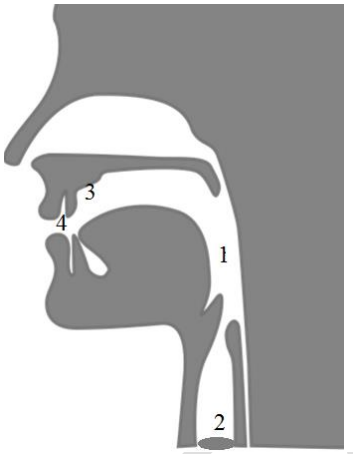
LABELS
a. Labial cavity
b. Pharyngeal cavity
c. Alveolar ridge
d. Laryngeal cavity- In the Darwinian sense, ________ refers to the ability of an organism to survive and produce a large number of fertile offspring.
- Comparing the thoughts of Heraclitus and Parmenides, we can say that:
- In his Yogasūtra, Patañjali mentions five kinds of afflictions (kleśas). Which one of the following is NOT among the five afflictions?
- Devanagari organizes the consonant graphemes as shown in the image. What is the parameter by which the following two rows differ?
क ख ग घ ङ /k/ /kʰ/ /g/ /gʰ/ /ŋ/ प फ ब भ म /p/ /pʰ/ /b/ /bʰ/ /m/
Need Expert Advice?


