
Heraclitus and Parmenides: Core Philosophical Contrasts
This comparison focuses on the fundamental metaphysical views of the ancient Greek philosophers Heraclitus and Parmenides.
Heraclitus's View: Unity in Flux
Heraclitus emphasized constant change ("everything flows") but also proposed an underlying rational principle, the Logos, which unifies the apparent opposites and multiplicity observed in the world.
Parmenides's View: The Unchanging One
Parmenides argued that reality, "What Is", is singular, eternal, and unchanging. He reasoned that change implies moving from non-being to being, which is impossible. Consequently, Parmenides concluded that the perceived plurality and change in the sensible world are illusory and denied their fundamental reality.
Key Distinction
The core difference is:
- Heraclitus identified a unity that underlies the apparent plurality and constant change.
- Parmenides rejected the concept of plurality altogether, asserting that only a single, unchanging reality exists.
Important Questions from Biological Basis of Behaviour Sensory Systems
Match the numbered parts of the vocal tract (in the diagram given below) with the correct label from those given in the box and choose the appropriate option.
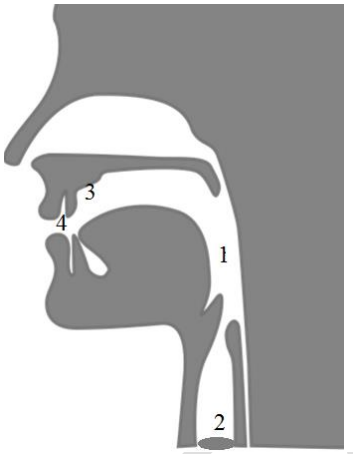
LABELS
a. Labial cavity
b. Pharyngeal cavity
c. Alveolar ridge
d. Laryngeal cavity- In the Darwinian sense, ________ refers to the ability of an organism to survive and produce a large number of fertile offspring.
- In his Yogasūtra, Patañjali mentions five kinds of afflictions (kleśas). Which one of the following is NOT among the five afflictions?
- Devanagari organizes the consonant graphemes as shown in the image. What is the parameter by which the following two rows differ?
क ख ग घ ङ /k/ /kʰ/ /g/ /gʰ/ /ŋ/ प फ ब भ म /p/ /pʰ/ /b/ /bʰ/ /m/ - Which of the following sound pairs differ from each other in exactly two articulatory parameters?


