The Hammett plot for the following transformation is :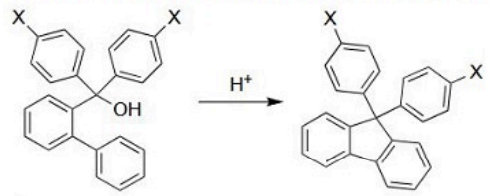
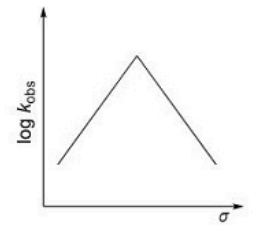
The question involves analyzing the Hammett plot for the given transformation. The Hammett equation is used to relate the reaction rates of a series of related compounds to the substituents present on the aromatic rings. It is represented as:
\[\log \left(\frac{k}{k_0}\right) = \sigma \rho\]where \(k\) is the rate constant for a substituted compound, \(k_0\) is the rate constant for the unsubstituted compound, \(\sigma\) is the substituent constant specific for a given position, and \(\rho\) is the reaction constant.
For this transformation, we notice:
- The reaction involves the change of a phenolic compound.
- The substituents \(X\) affect the acidity and reactivity of the phenolic group.
- Typically, electron-withdrawing groups increase the acidity, impacting the reaction rate.
The Hammett plot, therefore, shows the effect of substituents on the reaction rate. The correct Hammett plot for this transformation indicates a direct correlation between \(\log \left(\frac{k}{k_0}\right)\) and the substituent constants \(\sigma\). As the data is linear, it supports the use of the Hammett equation.
The correct answer is the plot showing a positive correlation with a slope reflecting the electron-withdrawing nature of the substituents enhancing the reaction rate.
Important Questions from Organic Reaction Mechanisms
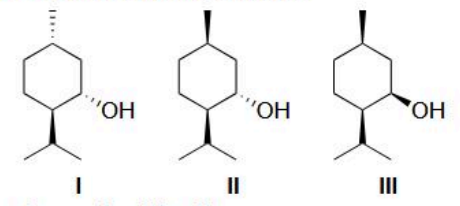
The correct order for the relative rate of esterification of I, II, and III with p-nitrobenzoyl chloride is
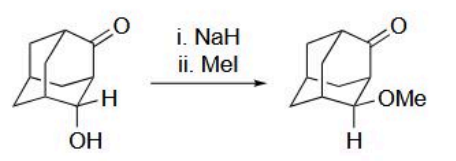
The correct sequence of processes involved in the following transformation is :
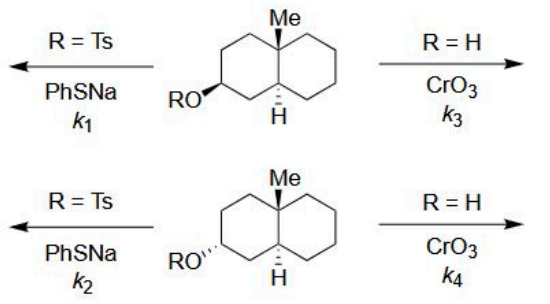
The relative order of rate constants in the following transformations are
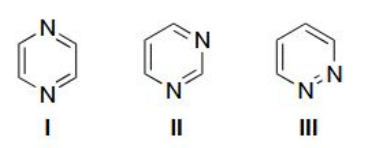
The correct order of basicity for the following compounds is
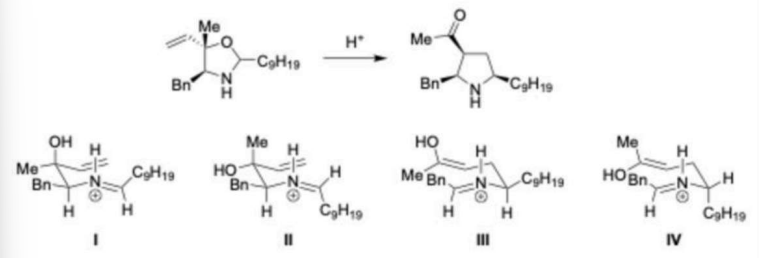
The intermediates involved in the following reaction are