
The above diagram shows a schematic planar configuration of three tectonic plates P-1, P-2 and P-3 and two plate boundaries at a spreading ridge (MOR) and subduction zone. A-B-C is a 1000km long hot spot track formed over a hotspot (HS) and for a period of 40 Myr. The ages of the volcanoes on the track would yield which one of the following relationships against their distances from the current location of the hotspot?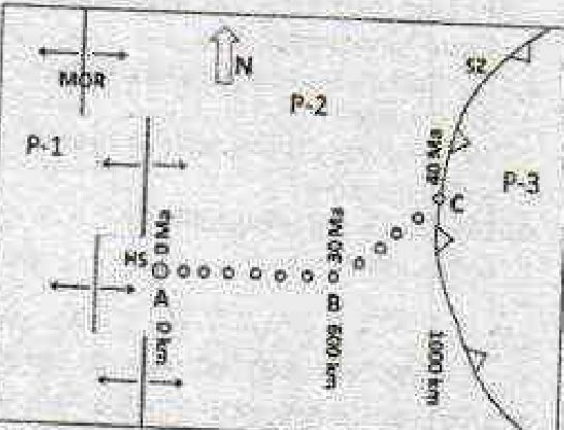
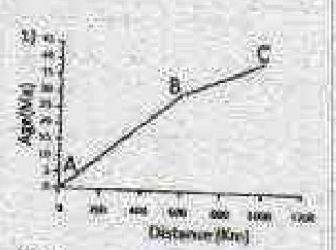
To solve the question, we need to analyze the diagram and the given data:
The diagram shows a 1000 km long hot spot track from points A to C over a period of 40 Myr (million years). The relationship between the ages of volcanoes on this track and their distances from the current location of the hotspot needs to be determined.
Analysis:
- The hotspot is stationary relative to the tectonic plates, while the plates move over it. This movement creates a chain of volcanoes, with the youngest volcano closest to the hotspot.
- Since the track length is 1000 km over 40 million years, the average rate of plate movement can be calculated as follows:
\(\text{Rate of plate movement} = \frac{\text{Distance}}{\text{Time}} = \frac{1000 \text{ km}}{40 \text{ Myr}} = 25 \text{ km/Myr}\)
Conclusion:
Using the linear relationship derived from the constant rate of movement, the age of the volcanoes increases linearly with increasing distance from the current hotspot location.
Therefore, the correct answer is:
Important Questions from Plate Tectonics
- The Paleo-Tethys Sea once separated
- Andean-type mountain belts form in
- Which of the following rock suits generally characterizes a plate boundary?
- In the table given below, indentify the correct pair
Plate boundary Type Example A. Oceanic Divergent F. San Andreas fault B. Continental Divergent G. Himalaya C. Oceanic-Continental convergence H. Mid Atlantic Ridge D. Continent-Continent convergence I. East African Rift E. Transform J. Andes - Which of the following processes is not related to plate tectonics?


