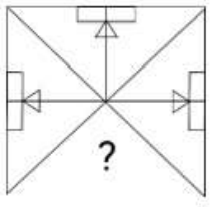
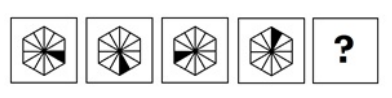
Select the figure from the options that when replaced with the question mark (?) will complete the series.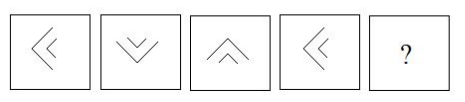
To solve the problem of determining the figure that completes the series, we need to carefully observe and identify the pattern or movement of the elements in each figure.
-
Look at the sequence of figures from left to right. Notice the direction in which the elements inside the boxes point.
The first figure shows an arrow pointing left.
-
The second figure shows an arrow pointing downward.
-
The third figure shows an arrow pointing upward.
-
The fourth figure returns to an arrow pointing left.
The pattern is a sequence of arrows rotating in a counter-clockwise direction: left, down, up, and then left again. The missing figure should complete the sequence by pointing down again.
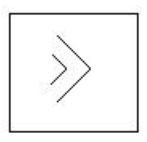
Now, let’s check the available options to find which one matches the expected figure that points downward.
This is the correct figure, as it completes the pattern by showing an arrow pointing downward.
Thus, the correct option is the one with the arrow pointing downward, which matches the sequence pattern.
Similar Questions
Study the given figure carefully and select the pattern that can replace the question mark (?) in it.
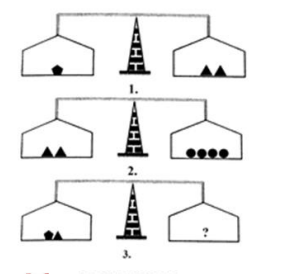
Study the given pattern carefully and select the option that can replace the question mark (?) in it.
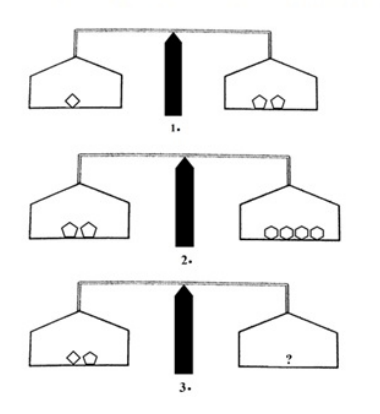
Select the figure from the options that when placed in the blank space will complete the pattern.
Important Questions from Completion of Incomplete Pattern
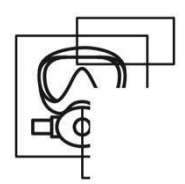
Which of the following option figures will complete the pattern in the figure given below?
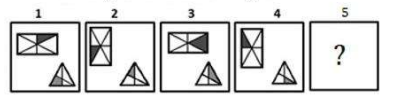
Each of the following questions consists of 4 figures marked 1, 2, 3 and 4 called the Problem Figures followed by 4 other figures. Select a figure from amongst the Answer Figures which will continue the same series as established by the four Problem Figures.
Select the option figure that will replace the question mark (?) in the figure given below to complete the pattern.

Select the set in which the numbers are related in the same way as are the numbers of the following sets.
(NOTE: Operations should be performed on the whole numbers, without breaking down the numbers into its constituent digits. E.g., 13 - Operations on 13 such as adding /deleting /multiplying etc. to 13 can be performed. Breaking down 13 into 1 and 3 and then performing mathematical operations on 1 and 3 is NOT allowed)
(4, 39), (5, 100)
Select the figure from the given options that will replace the question mark (?) in the figure given below to complete the pattern.