
_________ protection must be worn whenever noise levels exceed the noise exposure standard.
Hearing
Understanding Noise Exposure Standards and Protection
Exposure to excessive noise can cause significant health problems, particularly affecting hearing. Regulatory bodies establish noise exposure standards to define safe limits for sound levels in workplaces and other environments. When sound levels surpass these standards, it indicates a potentially hazardous situation that requires protective measures.
Why Hearing Protection is Crucial
The question asks what type of protection must be worn when noise levels exceed the noise exposure standard. The primary organ at risk from high noise levels is the ear, specifically the structures involved in hearing.
- Excessive noise can damage the delicate hair cells in the inner ear, leading to temporary or permanent hearing loss.
- Hearing loss caused by noise is often irreversible.
- Symptoms of noise-induced hearing loss can include difficulty understanding speech, ringing in the ears (tinnitus), and a reduced ability to hear high-pitched sounds.
Therefore, when noise levels exceed safe limits as defined by the noise exposure standard, it is essential to protect the ears to prevent hearing damage. This protection is known as hearing protection.
Analyzing the Options for Noise Protection
Let's look at the provided options:
- Hearing protection: This includes devices like earplugs or earmuffs, specifically designed to reduce the amount of sound entering the ear. This is the correct type of protection for excessive noise.
- Head protection: This typically involves hard hats or helmets, used to protect the head from impacts, falling objects, or electrical hazards. While important in many environments, it does not protect against noise.
- Eye protection: This includes safety glasses, goggles, or face shields, used to protect the eyes from particles, chemicals, glare, or radiation. This does not protect against noise.
- Foot protection: This involves safety shoes or boots, used to protect the feet from falling objects, punctures, electrical hazards, or slippery surfaces. This does not protect against noise.
Based on the function of each type of protection and the hazard posed by excessive noise levels exceeding the noise exposure standard, hearing protection is the necessary measure.
Noise Exposure Standards Explained
Noise exposure standards are set to limit the amount of noise a person can be exposed to over a specific period without suffering adverse health effects, primarily hearing loss. These standards often involve a maximum permissible sound level (usually measured in decibels, dB) and a duration of exposure. For example, a standard might specify a maximum exposure time for noise levels at or above 85 dB.
When workplace or environmental noise monitoring shows levels above the standard, controls must be implemented. These controls follow a hierarchy:
- Elimination or Substitution: Removing the noise source or replacing noisy equipment with quieter alternatives.
- Engineering Controls: Modifying the noise source or path, such as enclosing machinery, using sound barriers, or installing mufflers.
- Administrative Controls: Limiting the time workers spend in noisy areas or scheduling noisy tasks when fewer people are around.
- Personal Protective Equipment (PPE): Providing hearing protection to individuals when higher-level controls are not sufficient or feasible. This is often the first line of defense when immediate action is needed to meet the noise exposure standard.
Wearing appropriate hearing protection is a critical step when engineering or administrative controls are not enough to bring noise exposure below the established standard.
Conclusion on Required Protection
When noise levels exceed the noise exposure standard, there is a risk of damage to hearing. Therefore, the required protection is specifically designed to mitigate this risk by reducing the sound energy reaching the ears. This protection is hearing protection.
| Type of Protection | Primary Hazard Protected Against | Relevant to Excessive Noise? |
|---|---|---|
| Hearing Protection (Earplugs, Earmuffs) | Excessive Noise Levels, Hearing Loss | Yes |
| Head Protection (Hard Hats, Helmets) | Impacts, Falling Objects, Electrical Hazards | No |
| Eye Protection (Glasses, Goggles) | Particles, Chemicals, Glare, Radiation | No |
| Foot Protection (Safety Shoes, Boots) | Falling Objects, Punctures, Electrical Hazards | No |
Revision Table: Noise Safety Basics
| Concept | Description |
|---|---|
| Noise Exposure Standard | Defines permissible limits for noise levels and duration to prevent hearing damage. |
| Excessive Noise | Noise levels above the established standard, posing a risk to hearing. |
| Hearing Protection | Devices worn to reduce sound entering the ears (e.g., earplugs, earmuffs). |
| Noise-Induced Hearing Loss | Hearing damage caused by exposure to loud sounds. |
Additional Information on Hearing Protection
Choosing the right hearing protection depends on the noise level and the type of noise. Hearing protection devices are rated by their Noise Reduction Rating (NRR), which indicates how many decibels they can reduce the noise level. Proper fit and consistent use are crucial for hearing protection to be effective in meeting the noise exposure standard.
Regular audiometric testing (hearing tests) is often required for individuals working in environments with high noise exposure to monitor their hearing health and the effectiveness of noise control measures and hearing protection programs.
Similar Questions
- Which one of the following is the largest source of natural energy to humans?
What happens to the ammeter reading when the length of the wire is doubled?
The study of human evolution indicates that all of us belong to a single species that evolved in ________.
According to National AIDS Control Organisation, almost 50% of new HIV infections are taking place in the age group of:
A ______ map converts color intensity or grayscale information to heights to give the appearance that features are raised above the surface, like embossed letters.
Safety boots or shoes must be worn in designated areas to protect your _______ from falling objects.
The ratio of the shorter side of an A4 sheet to the longer side of an A3 sheet is ______.
Where is the "title block" usually made?
Which type of pencil has the hardest graphite lead?
A ‘compass’ is used to draw:
Important Questions from Miscellaneous
Read the given figure and find the region representing persons who are educated and employed but not confirmed in job.
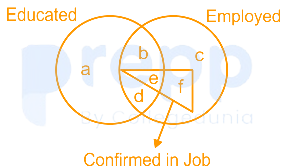
The magazine in which Mahatma Gandhi mentioned what he wanted the Constitution to do is:
Which gas shields the surface of the earth from ultraviolet radiation from the sun?
Which event is marked as an Intangible Cultural Heritage of Humanity by UNESCO?
Who has been conferred with the rank of the Commander of the Order of the British Empire in 2018?



