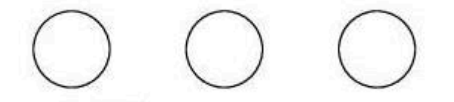
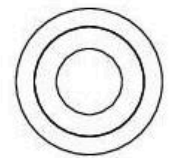
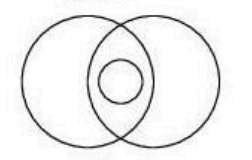
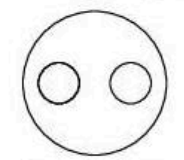
Match List - I with List - II. Choose the correct answer from the options given below :List - I
Mineral PropertyList - II
Type of lightA. Cleavage I. Plane polarized B. Twinkling II. Ordinary C. Twinning III. Crossed nicols D. Disperson IV. Convergent
Mineral Properties Matching
This solution details the correct pairings between specific mineral properties (List I) and their corresponding types of light or optical conditions (List II).
- A. Cleavage is matched with II. Ordinary light.
- B. Twinkling is matched with I. Plane polarized light.
- C. Twinning is matched with III. Crossed nicols.
- D. Dispersion is matched with IV. Convergent light.
Matching Rationale
A. Cleavage: This property describes how a mineral breaks. Basic observation, often using ordinary, unpolarized light, is sufficient to identify cleavage planes.
B. Twinkling: This refers to the sparkling or flashing effect seen in some minerals. Analysis, particularly of surface reflections, can involve using plane polarized light.
C. Twinning: Mineral twinning involves specific crystal intergrowths. The definitive method for observing twinning optically is by using crossed nicols (crossed polarizers).
D. Dispersion: This is the separation of light into colors due to wavelength-dependent refractive indices. Phenomena related to dispersion are often studied using convergent light, particularly in conoscopic setups under a polarizing microscope.
The established correct match set is A-II, B-I, C-III, D-IV.
Similar Questions
Given below are two statements : one is labelled as Assertion (A) and the other is labelled as Reason (R).
Assertion (A) : Gypsum has lower density than anhydrite.
Reason (R) : Hydrated minerals tend to expand many times the original volume of the anhydrous minerals.
In the light of the above statements, choose the most appropriate answer from the options given below :
Given below are two statements : one is labelled as Assertion (A) and the other is labelled as Reason (R).
Assertion (A) : Drumlins show features opposite to those of Roches Moutonnees.
Reason (R) : The stoss side is steep and the lee side is roughened.
In the light of the above statements, choose the most appropriate answer from the options given below :
Given below are two statements : one is labelled as Assertion (A) and the other is labelled as Reason (R).
Assertion (A) : In a hand specimen quartz can be easily distinguished from orthoclase.
Reason (R) : Orthoclase has lower refractive index than quartz.
In the light of the above statements, choose the most appropriate answer from the options given below :
Given below are two statements : one is labelled as Assertion (A) and the other is labelled as Reason (R).
Assertion (A) : Chronostratigraphy is concerned with the mutual time relationship of strata.
Reason (R) : Formation, member and bed are units of chronostratigraphy.
In the light of the above statements, choose the most appropriate answer from the options given below :
Match List - I with List - II.
List - I
Optical featureList - II
Optical diagramA. Wave front (isotropic) I. Ellipse B. Wave surface (isotropic) II. Sphere C. Wave front (anisotropic) III. ellipsoidal D. Wave surface (anisotropic) IV. circle Choose the correct answer from the options given below :
- A solid crystal in which a face on one side is opposite to a point on the other, is called :
- Which of the following pairs do not have the same number of classes in their crystal system ?
- The relative abundance of a particular face of a crystal is a function of :
- In case of dipping beds, progressively younger beds occur along the directions of dip if :
- On level surface, elliptical outcrops are commonly exhibited by :
Important Questions from Mixed Topic (CUET PG)
- Kalpsutra, the illustrated canonical text is from:-
- The Harappan city almost exclusively devoted to craft production was-:
- Mohandas Karamchand Gandhi launched quit India movement after the failure of:-
- The "Objectives Resolution" was introduced in constituent assembly by:-
- Who among the following was not a member of the constituent assembly:-