In early 2025, the planets in a ‘planetary parade’ appeared lined up in the order of their _____.
distance from the Sun
A planetary parade, also called a planetary alignment, is a sky event in which several planets of the Solar System become visible together across the same broad arc of the sky at roughly the same time.
All planets travel around the Sun in nearly the same flat plane called the ecliptic, so from the Earth they always appear strung along a single line across the sky rather than scattered randomly.
During the early 2025 event, planets such as Mercury, Venus, Mars, Jupiter and Saturn were seen arranged in the order of their distance from the Sun, that is in the sequence of their orbital positions outward from the centre of the Solar System.
This ordering follows directly from the layout of the Solar System, where each planet occupies a fixed orbit at a set average distance from the Sun.
The arrangement was not based on size, because a small planet like Mercury can lie between larger ones, nor on brightness, since apparent brightness depends on distance and reflectivity, nor on orbital speed, which merely governs how fast each planet moves along its own path.
Hence the correct basis of ordering in the parade was the planets' positions measured outward from the Sun.
Therefore the answer is distance from the Sun.
Similar Questions
In April 2025, which country has launched the 'Three Gorges Antarctic Eye' telescope?
Which of the following is the India's first interplanetary mission?
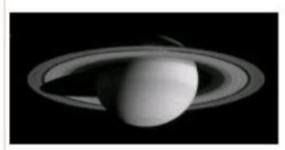
The below given image is of which of the following planet of our solar system?
If a satellite is in the plane of the equator with 0 degrees inclination and at a height of about 36000 km then it is said to be in _______ orbit.
Important Questions from Origin and evolution of Universe Solar system
- Despite its greater distance from the Sun compared to Mercury, Venus maintains the highest surface temperature of any planet in our solar system. Which of the following is the primary reason for Venus's extreme heat?
What was the name of the mega-ocean that surrounded the single continental mass before the continental drift as described by Alfred Wegener?
A huge collection of gas, dust and billions of stars is called a:
The Greenwich Mean Time is the local time at :
The force exerted by rotation of the earth is known as: