Question
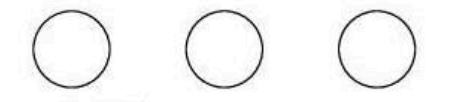
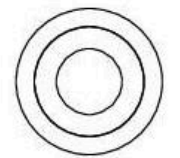
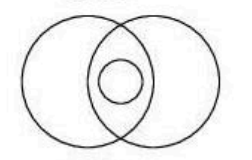
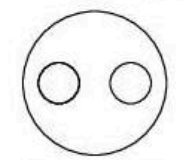
Galactosyl transferase is a marker associated with ?
This question was previously asked in
CUET PG 2026 Agri-Business Management Question Paper (25-Mar-2026) (Shift 2)
The correct answer is
Golgi apparatus
Galactosyl Transferase Localization
Galactosyl transferase is an enzyme crucial for modifying proteins and lipids through glycosylation. It catalyzes the transfer of galactose residues, a key step in forming complex carbohydrates on molecules.
Enzyme Function and Cellular Location
- Function: Adds galactose units during the synthesis of oligosaccharides. This process is vital for the proper folding, function, and targeting of many proteins and lipids.
- Primary Location: The Golgi apparatus is the main site where Galactosyl transferase enzymes are found and function.
- Reasoning: The Golgi apparatus is the central organelle for further processing, modification, and packaging of proteins and lipids synthesized in the endoplasmic reticulum. Glycosylation steps, including those catalyzed by Galactosyl transferase, occur sequentially as molecules move through the Golgi cisternae.
Analysis of Options
- Golgi apparatus: Correct. Enzymes involved in complex glycosylation reside and act here.
- Peroxisome: Incorrect. Primarily involved in metabolic processes like breaking down fatty acids and detoxification.
- Plasma membrane: Incorrect. While some final glycosylation products are found on the plasma membrane, the enzymes responsible for their synthesis in the Golgi are not primarily located here.
- Cytosol: Incorrect. Basic glycosylation can occur in the cytosol, but the complex processing involving Galactosyl transferase happens within the membrane-bound compartments of the Golgi apparatus.
Was this answer helpful?
Similar Questions
- Total score for class IV (upper lower) as per Kuppu Swamy's scale is in one of the following ranges :
- Chancroid is caused by which of the following pathogenic agents ?
- Ehlers - Danlos syndrome illustrates a genetic defect of ?
- An infectious agent being present in an inanimate articles the skin surface, particularly on hands, is called :
- The mode followed in transmission of microfilaria through a female culex mosquito is :
- The form(s) available on Integrated Health Information Platform (IHIP) under integrated disease surveillance programme (IDSP) portal to enable data entry is/are :
- Which of the following vaccines, was used first time to immunize humans and included in Expanded Program on Immunization (EPI) :
- The first human disease to be conclusively proved to be caused by a microorganism as well as first disease against which effective vaccine has been developed :
- The mode followed in transmission of plague bacillus in the mouth of a rat flea is :
- The Epidemiological Transition Ratio (ETR) is now being used to measure the amount of epidemiological transmission in a community or the country, which is defined as; DALY due to CMNND $\div$ DALY due to NCD and injuries. CMNND includes :
Important Questions from Miscellaneous
- Which of the following relationships is/are not true?
(A). Most probable velocity = $\sqrt{\frac{2RT}{M}}$
(B). PV = $\frac{3}{2}kT$
(C). Compressibility factor Z = $\frac{pV}{nRT}$
(D). Average kinetic energy of gas = $\frac{1}{2}kT$
Choose the correct answer from the options given below - Match List-I with List-II
List-I List-II Electronic Configuration First Ionisation energy (kJ mol$^{-1}$) (A). ns$^2$ (I). 2100 (B). ns$^2$np$^1$ (II). 1400 (C). ns$^2$np$^3$ (III). 800 (D). ns$^2$np$^6$ (IV). 900
Choose the correct answer from the options given below: - The shielding constant of a 2p electron (calculated using Slater's rules) is
- Match List-I with List-II
List-I List-II Spectroscopy Property (A). Raman (I). Polarizability (B). FTIR (II). Dipole Moment (C). UV-Visible (III). Absorbance (D). NMR (IV). Spin
Choose the correct answer from the options given below: - The structure of protein comprises of:
(A). Primary structure of protein is associated with amino acids
(B). Secondary structure of protein is associated to peptides
(C). Tertiary structure of protein is associated with polypeptide chains
(D). Quaternary structure of protein is associated with polypeptide chains
Choose the correct answer from the options given below:
Need Expert Advice?
Upcoming Exams
GATE
February 06, 2027
Test Series

CUET
CUET PG Psychology (HUQP20) 2026 Mock Test Series
10 Tests
792 Attempts
3.7(15)
English
More Questions from CUET PG