Calcite Composition Analysis
The analysis of the calcite spar grain reveals specific elemental concentrations that help determine its formation environment:
- Low Magnesium (Mg) and Strontium (Sr): These elements are typically incorporated into calcite precipitated directly from normal seawater or shallow marine pore fluids. Low concentrations suggest the calcite formed from fluids chemically distinct from seawater, such as meteoric or evolved subsurface waters.
- High Iron (Fe): Increased iron content in calcite is often linked to precipitation from fluids under reducing conditions. Such conditions are common in deeper subsurface environments where organic matter decomposition consumes oxygen and makes iron available (as Fe(II)).
Evaluating Diagenetic Settings
We can evaluate the potential diagenetic environments based on these chemical indicators:
- Deep burial diagenesis: This environment is characterized by increased temperature, pressure, and often reducing conditions. Pore fluids circulating at depth can become enriched in Fe leached from surrounding rocks and sediments. The precipitation of calcite under these conditions typically results in low Mg/Sr and high Fe content.
- Vadose diagenesis: Occurs above the water table in the unsaturated zone. Precipitates are usually derived from meteoric water. While Mg/Sr can be low, high Fe is less common unless a specific iron source is nearby and conditions are reducing.
- Deep phreatic diagenesis: Occurs below the water table, but not necessarily at great depths. Fluids are generally meteoric or mixed. Mg/Sr content can be low, but high Fe is not a defining characteristic of this environment without specific localized sources.
- Sea floor diagenesis: This involves processes occurring immediately after sediment deposition, before significant burial. Calcite cements formed in this setting (e.g., early marine cements) tend to reflect seawater chemistry, meaning they would be relatively enriched in Mg and Sr, contrary to the findings.
Diagenesis Interpretation
The combination of low Mg/Sr and high Fe in the calcite spar grain is a strong indicator of precipitation from iron-rich, reducing fluids circulating within the subsurface. This geochemical signature is most consistent with deep burial diagenesis.
Important Questions from Sedimentary Rocks
The modal analysis of a sandstone is as follows:
Quartz 36%
Feldspar 55%
Matrix 08%
Rock fragments 01%
It may be classified as- From the following list of rocks, identify the pair of rocks which are different from others with reference to restricted occurrence in the geological past and mode of origin
- Which of the following sediment types has the highest permeability?
- Presence of minerals such as pyrite and uraninite as detrital minerals in sedimentary rocks suggests that at the time of deposition
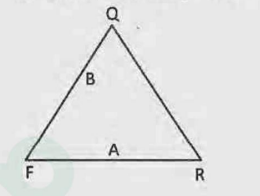
Quartz (Q), feldspar (F) and rock fragment (R) contents are plotted in the given ternary diagram. Identify the correct set of tectonic milieu for ‘A’ and ‘B’ sandstones as plotted in the diagram