Understanding Land Surface Infiltration Rates
Water infiltration is the process by which water on the ground surface enters the soil. The rate of infiltration depends significantly on the type of land surface, soil properties, and vegetation cover. A lower infiltration rate means water stays on the surface longer, increasing runoff potential.
Analysis of Land Surfaces and Infiltration
Let's examine how different land surfaces affect water infiltration:
- Forest: Typically exhibits high infiltration rates. The forest floor is covered with leaf litter and organic matter, which enhances water absorption. Tree roots also create channels in the soil, further improving infiltration.
- Heavily grazed pasture: This land surface often experiences minimum water infiltration. Continuous grazing by livestock compacts the soil significantly. This compaction reduces pore spaces, hindering water movement into the soil and leading to increased surface runoff. The vegetation cover may also be depleted.
- Cultivated land: Infiltration rates can vary. Tilling (plowing) can temporarily increase infiltration by loosening the soil. However, prolonged or intensive cultivation can lead to soil degradation and reduced infiltration compared to natural or well-managed grasslands. Still, it's generally better than heavily compacted soil.
- Grassland: Generally has good infiltration rates due to the presence of vegetation and root systems, which help maintain soil structure and porosity. Soil compaction is usually lower than in heavily grazed pastures.
Conclusion on Minimum Infiltration
Comparing the options, the heavily grazed pasture is the land surface most likely to have the minimum water infiltration rate due to severe soil compaction caused by livestock.
Important Questions from Hydrology And Water Resources
- A river with $2\text{ km}$ wide flood plain and $10\text{ m}$ channel depth flows with a velocity of $2\text{ ms}^{-1}$. What will be flow condition in the river?
Read the following statements and choose the CORRECT answer.
I. The suspended sediment concentration in rivers is supply-limited rather than hydraulically-limited, when
II. Much suspended material is contributed by overland flow from hillslope erosion
III. Suspended material is entirely derived by turbulent diffusion from the channel bed
- With reference to water in the hydrologic cycle, its residence time is the maximum in
Match the basin types A, B and C with the hydrograph patterns P, Q and R
Basin types Hydrograph pattern A. 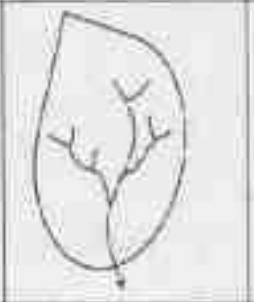
P. 
B. 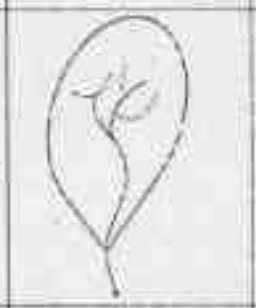
Q. 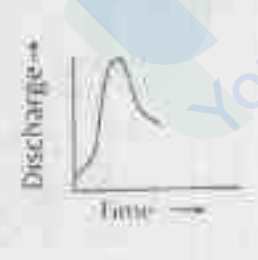
C. 
R. 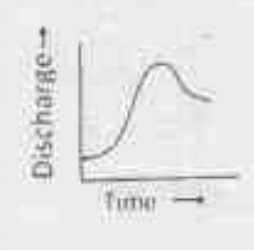
Hydraulic gradient beneath A and B during rainy and dry seasons will