
Question
Which of the following microfossils has/have a geological range from Cambrian to Recent?
Microfossil Geological Range: Cambrian to Recent
This question requires identifying microfossils that have existed continuously from the Cambrian period up to the present day (Recent). This involves understanding the stratigraphic distribution of different fossil groups.
Analyzing Microfossil Geological Ranges
Let's examine the known geological ranges for each option:
- Foraminifera: This group of shelled amoeboid protists first appeared in the fossil record during the Cambrian or Ordovician periods and continues to the Recent epoch.
- Diatoms: These single-celled algae are known primarily from the Mesozoic Era (specifically the Cretaceous period) onwards to the Recent. They do not extend back to the Cambrian.
- Radiolaria: These planktonic protists, known for their intricate silica skeletons, have a geological range extending from the Cambrian (or possibly Precambrian) to the Recent epoch.
- Dinoflagellates: While some fossil dinoflagellates date back to the Cambrian, many sources place their significant diversification and clear fossil record starting in the Silurian period. However, their range *can* include the Cambrian according to some paleontological data, but Foraminifera and Radiolaria are definitively known from the Cambrian to Recent.
Identifying Microfossils with Cambrian to Recent Range
Based on established paleontological data, Foraminifera and Radiolaria are the microfossil groups that reliably span the entire geological timeframe from the Cambrian period to the Recent epoch.
- Foraminifera (A) originated in the early Paleozoic and persist today.
- Radiolaria (C) also originated in the early Paleozoic and persist today.
Therefore, the microfossils fitting the criteria are Foraminifera and Radiolaria.
Was this answer helpful?
Important Questions from Paleobiology (Microfossils: Foraminifera, Ostracoda, etc.)
- Which of the following microfossils is/are foraminifera?
- Which of the following statement(s) is/are correct?
- Which one of the following microfossils is commonly used in biostratigraphic correlation of Palaeozoic marine strata?
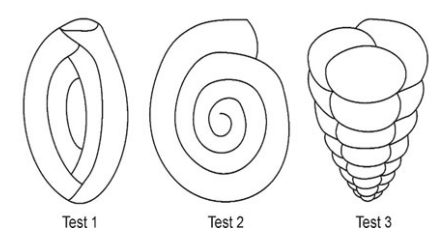
Choose the CORRECT combination of foraminiferal tests and types of coiling.
- Match foraminifera in Group I with its wall structure in Group II
Group I Group II P. Fusulina 1. Hyaline Q. Cibicides 2. Porcellaneous R. Textularia 3. Microgranular S. Quinqueloculina 4. Agglutinated
Need Expert Advice?


