
The question asks to identify which option does NOT represent a consumer problem stemming from inadequate or incorrect information provided by the manufacturer.
Understanding Information-Related Consumer Problems
Consumer problems related to manufacturer information errors include issues where the data provided about a product is inaccurate, misleading, or insufficient. This covers aspects like:
- False claims in advertising.
- Inaccurate details on product labels.
- Lack of necessary guidance for product use or selection.
Analyzing the Options
Let's examine each option in the context of information provided by the manufacturer:
- Option 1: Labels not factually correct, deceptive and misleading - This is a direct example of erroneous and inadequate information provided on product labels.
- Option 2: Incorrect weights and measures - This issue pertains to the actual quantity or physical measurement of the product being less than stated or expected. While it can be associated with misleading information, the core problem is a discrepancy in the product's physical quantity itself, not just the information about it.
- Option 3: Non-informative advertisements - This represents a lack of adequate information in promotional content, which is an information-related problem.
- Option 4: Lack of buying guides to aid the consumer in decision-making - This highlights insufficient or missing information that helps consumers make informed choices, qualifying as an information problem.
Conclusion on Information vs. Product Issues
Options 1, 3, and 4 all clearly describe problems arising from faulty or missing information. Option 2, however, focuses on a discrepancy in the physical aspect (quantity/weight) of the product. While manufacturers might provide misleading information related to weights and measures, the problem of "incorrect weights and measures" itself is fundamentally about the product's physical inaccuracy, not solely about the informational content.
Therefore, incorrect weights and measures is the scenario that is NOT exclusively an example of a consumer problem regarding inadequate or erroneous information.
Important Questions from Consumer Protection
Identify the given standardisation mark.
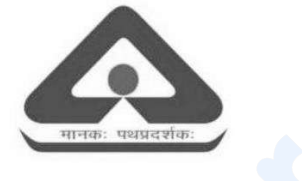
- Which of the following is NOT a consumer responsibility?
- Match List-I with List-II:Choose the correct answer from the options given below:
Consumer Organisation Publication (A) Consumer Union (I) Consumer Voice (B) VOICE (II) Insight (C) Australian Consumer Association (III) Consumer Report (D) CERC (IV) Choice - Ms. Y purchased a geyser, which got bursted when she switched it on. Which consumer right of her's is violated in this case ?
The importance of consumer protection from the business point of view includes:
(A) Social responsibility
(B) Government intervention
(C) Business uses its own resources
(D) Long term interest of business
Choose the correct answer from the options given below:


