
Question
Which is the most common laryngeal abnormality that produces laryngeal stridor in a newborn?
The correct answer is
Laryngomalacia
Laryngomalacia: Most Common Cause of Newborn Stridor
Laryngomalacia is identified as the most common congenital laryngeal abnormality causing laryngeal stridor in a newborn.
Laryngomalacia Details
- It involves the collapse of laryngeal structures (often the epiglottis and aryepiglottic folds) inward during inhalation due to weak cartilage.
- This collapse narrows the airway, producing the characteristic inspiratory stridor sound.
- Symptoms typically appear within the first few weeks of life and often improve spontaneously by 6-18 months.
Other Conditions Considered
While other congenital abnormalities can cause stridor, they are less frequent:
- Congenital subglottic stenosis: A narrowing below the vocal cords, less common than laryngomalacia.
- Congenital web: A membrane obstructing the airway, rarer than laryngomalacia.
- Congenital vocal cord paralysis: Impaired vocal cord movement, also less common than laryngomalacia as a cause of stridor.
Therefore, Laryngomalacia is the primary diagnosis to consider for inspiratory stridor in neonates.
Was this answer helpful?
Important Questions from Throat Disorders
- Regarding “Quinsy” all of the following are correct EXCEPT:
- Carcinoma of pyriform fossa usually presents with :
- A localized nodule of squamous cell carcinoma in the vocal cord is best treated by
- What is the most common indication of tracheostomy in a child?
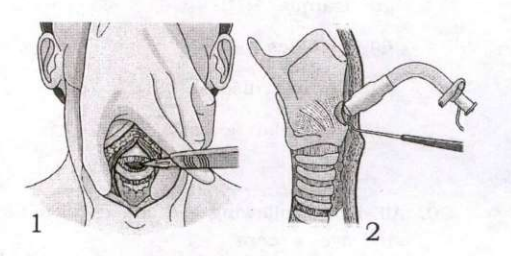
The procedure shown in the following images is
Need Expert Advice?


