
Question
Regarding “Quinsy” all of the following are correct EXCEPT:
The correct answer is
Pus may be seen pointing underneath the thin mucosa in all cases and is diagnostic
Quinsy Diagnosis: Identifying the Incorrect Statement
Quinsy, also known as a peritonsillar abscess, is a complication of tonsillitis. It involves the collection of pus in the tissues around the tonsils.
Analyzing Quinsy Statements
- Option 1: Correct. A quinsy is indeed characterized as an abscess forming in the peritonsillar space, the area adjacent to the tonsil.
- Option 2: Correct. Severe difficulty in opening the mouth (trismus) is a common and significant symptom. It results from painful spasms of the muscles surrounding the jaw joint, particularly the medial pterygoid muscles, due to inflammation and irritation.
- Option 3: Incorrect. This statement claims that pus is visible ("pointing") under the mucosa in all cases and that this finding is sufficient for diagnosis. While visible pus is a strong indicator, it is not present in every single case of quinsy. Diagnosis often relies on clinical signs, symptoms, and sometimes imaging, especially when pus is not obviously visible. The universality ("in all cases") and the definitive diagnostic claim make this statement incorrect.
- Option 4: Correct. In the early stages, before a well-formed abscess develops, prompt treatment with intravenous broad-spectrum antibiotics can sometimes help to manage the infection and potentially prevent the formation or progression of the abscess.
Therefore, the statement that is NOT correct regarding Quinsy is that pus may be seen pointing underneath the thin mucosa in all cases and is diagnostic.
Was this answer helpful?
Important Questions from Throat Disorders
- Carcinoma of pyriform fossa usually presents with :
- Which is the most common laryngeal abnormality that produces laryngeal stridor in a newborn?
- A localized nodule of squamous cell carcinoma in the vocal cord is best treated by
- What is the most common indication of tracheostomy in a child?
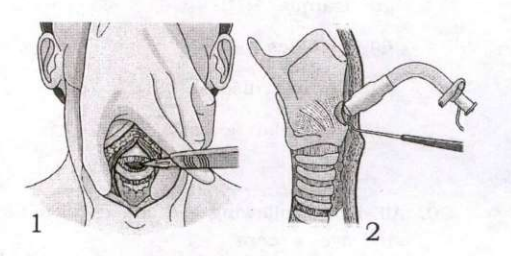
The procedure shown in the following images is
Need Expert Advice?


