
When reduction in the ambient temperature with height $r_t$, is greater than the change in temperature with height induced by a dry adiabatic process, $r_d$ atmosphere is said to be
Understanding Atmospheric Instability Conditions
Atmospheric stability describes how a lifted air parcel behaves relative to its environment. This behavior depends on the comparison between the environmental lapse rate (how temperature decreases with height in the surrounding atmosphere) and the adiabatic lapse rate (how a parcel's temperature changes as it rises or sinks adiabatically).
Lapse Rates Explained
Key lapse rates include:
- Environmental Lapse Rate ($r_t$): The actual rate of decrease in ambient atmospheric temperature with altitude.
- Dry Adiabatic Lapse Rate ($r_d$): The rate at which a rising or descending parcel of *unsaturated* air changes temperature. This is approximately $9.8^\circ C$ per kilometer.
Condition for Instability
The question states a specific condition where the reduction in ambient temperature with height ($r_t$) is greater than the temperature change induced by a dry adiabatic process ($r_d$). Mathematically, this is represented as:
$r_t > r_d$
When the surrounding atmosphere cools faster with height ($r_t$) than a rising dry air parcel ($r_d$), the rising parcel remains warmer and less dense than its environment at any given altitude above its starting point. This density difference causes the parcel to accelerate upwards, leading to instability.
Determining Atmospheric State
Based on the comparison of lapse rates:
- If $r_t > r_d$, the atmosphere is absolutely unstable. The parcel will always continue to rise.
- If $r_t < r_d$, the atmosphere is stable. The parcel will sink back.
- If $r_t = r_d$, the atmosphere is neutral. The parcel will stay at its new altitude.
The condition $r_t > r_d$ directly corresponds to an absolutely unstable atmosphere.
Important Questions from Meteorology - Teaching
Match List I with List II
LIST I (Weather parameter) LIST II (Weather symbol) A. Light rain I. 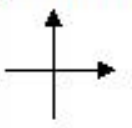
B. Ice pellets (sleet) II. 
C. Showers of hail III. 
D. Drifting or blowing snow IV. 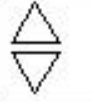
Choose the correct answer from the options given below:- If at latitude $\phi = 30^{\circ}$, pressure gradient is 15 mb per 1000 km, the geostrophic wind velocity will be :
- Given below are two statements. One labelled as Assertion (A) and the other labelled as Reason (R) :
Assertion (A) : A wind rose with approximately equal length spokes (or petals) represents great variation of wind direction over a given duration.
Reason (R) : The length of the spokes is a measure of wind speeds in a given duration. Choose the correct answer : - A common features of the synoptic and mesoscale motions in the atmosphere is that their :
- The shape of a plume from a tall stack located on a flat terrain is found to be of “fanning” type. It implies that the atmosphere is under the condition of :


