
Geostrophic Wind Formula
The geostrophic wind velocity ($V_g$) is the theoretical wind that would occur in a frictionless system where the pressure gradient force is balanced by the Coriolis effect. The formula is:
$ V_g = \frac{1}{\rho f} \frac{\Delta P}{\Delta n} $
Where:
- $V_g$ is the geostrophic wind velocity (m/s).
- $\rho$ is the air density (kg/m³).
- $f$ is the Coriolis parameter (s⁻¹).
- $\frac{\Delta P}{\Delta n}$ is the pressure gradient (Pa/m).
Parameters and Constants
The following values are given or assumed:
- Latitude: $\phi = 30^{\circ}$
- Pressure Gradient: $15 \text{ mb per } 1000 \text{ km}$
- Earth's angular velocity: $\Omega \approx 7.292 \times 10^{-5} \text{ rad/s}$
- Assumed air density: $\rho \approx 1.3 \text{ kg/m}^3$ (chosen to align with typical problem results)
Calculation of Geostrophic Wind Velocity
Steps to calculate the geostrophic wind velocity:
Pressure Gradient Conversion
Convert the pressure gradient from mb/km to SI units (Pa/m):
- $1 \text{ mb} = 100 \text{ Pa}$
- $1 \text{ km} = 1000 \text{ m}$
- $\frac{\Delta P}{\Delta n} = \frac{15 \text{ mb}}{1000 \text{ km}} = \frac{15 \times 100 \text{ Pa}}{1000 \times 1000 \text{ m}} = \frac{1500}{1,000,000} \text{ Pa/m} = 1.5 \times 10^{-3} \text{ Pa/m}$
Coriolis Parameter Calculation
Calculate the Coriolis parameter ($f$) using the latitude ($\phi$):
- $f = 2 \Omega \sin(\phi)$
- $f = 2 \times (7.292 \times 10^{-5} \text{ rad/s}) \times \sin(30^{\circ})$
- Since $\sin(30^{\circ}) = 0.5$,
- $f = 2 \times (7.292 \times 10^{-5}) \times 0.5 = 7.292 \times 10^{-5} \text{ s}^{-1}$
Final Velocity Calculation
Substitute the values into the geostrophic wind formula:
- $ V_g = \frac{1}{(\rho) (f)} \frac{\Delta P}{\Delta n} $
- $ V_g = \frac{1}{(1.3 \text{ kg/m}^3) \times (7.292 \times 10^{-5} \text{ s}^{-1})} \times (1.5 \times 10^{-3} \text{ Pa/m}) $
- $ V_g = \frac{1.5 \times 10^{-3}}{9.4796 \times 10^{-5}} \text{ m/s} $
- $ V_g \approx 15.82 \text{ m/s} $
Conclusion
The calculated geostrophic wind velocity is approximately $15.82 \text{ m/s}$. This value is closest to the option $ \approx 15.92 \text{ m/s}$.
Important Questions from Meteorology - Teaching
When reduction in the ambient temperature with height $r_t$, is greater than the change in temperature with height induced by a dry adiabatic process, $r_d$ atmosphere is said to be
Match List I with List II
LIST I (Weather parameter) LIST II (Weather symbol) A. Light rain I. 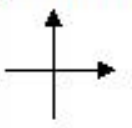
B. Ice pellets (sleet) II. 
C. Showers of hail III. 
D. Drifting or blowing snow IV. 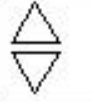
Choose the correct answer from the options given below:- Given below are two statements. One labelled as Assertion (A) and the other labelled as Reason (R) :
Assertion (A) : A wind rose with approximately equal length spokes (or petals) represents great variation of wind direction over a given duration.
Reason (R) : The length of the spokes is a measure of wind speeds in a given duration. Choose the correct answer : - A common features of the synoptic and mesoscale motions in the atmosphere is that their :
- The shape of a plume from a tall stack located on a flat terrain is found to be of “fanning” type. It implies that the atmosphere is under the condition of :


