
Assertion (A) : A wind rose with approximately equal length spokes (or petals) represents great variation of wind direction over a given duration.
Reason (R) : The length of the spokes is a measure of wind speeds in a given duration.
Choose the correct answer :
Assertion (A) Analysis: Wind Rose Variation
A wind rose visually represents the frequency distribution of wind directions over a specified period. The spokes (or petals) extend from the center to indicate the direction from which the wind predominantly blows. If the spokes on a wind rose are of approximately equal length, it signifies that winds have been blowing with similar frequency from various directions. This lack of dominance by any single direction indicates variability or variation in wind direction. Therefore, the assertion that equal length spokes represent great variation of wind direction is considered correct in the context of interpreting wind roses.
Reason (R) Evaluation: Spokes and Wind Speed
The primary purpose of the length of the spokes in a standard wind rose is to represent the frequency (often as a percentage of time) or duration that the wind blows *from* a particular direction. While some advanced meteorological diagrams might incorporate wind speed information, the length of the main spokes itself is not the standard measure for wind speed. Wind speed is more commonly indicated using concentric circles representing speed ranges or different color-coding within the spokes.
Therefore, the reason stating that the length of the spokes is a measure of wind speeds is factually incorrect.
Conclusion: Correct Option Selection
- Assertion (A) is true: Equal spoke lengths indicate variability in wind direction.
- Reason (R) is false: Spoke length primarily represents wind direction frequency, not speed.
Based on this analysis, the correct choice is that Assertion (A) is true, but Reason (R) is false.
Important Questions from Meteorology - Teaching
When reduction in the ambient temperature with height $r_t$, is greater than the change in temperature with height induced by a dry adiabatic process, $r_d$ atmosphere is said to be
Match List I with List II
LIST I (Weather parameter) LIST II (Weather symbol) A. Light rain I. 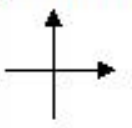
B. Ice pellets (sleet) II. 
C. Showers of hail III. 
D. Drifting or blowing snow IV. 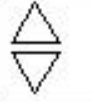
Choose the correct answer from the options given below:- If at latitude $\phi = 30^{\circ}$, pressure gradient is 15 mb per 1000 km, the geostrophic wind velocity will be :
- A common features of the synoptic and mesoscale motions in the atmosphere is that their :
- The shape of a plume from a tall stack located on a flat terrain is found to be of “fanning” type. It implies that the atmosphere is under the condition of :


