
What is the major product formed when diazonium salt undergoes Gatterman reaction?
Haloarene
Understanding the Gatterman Reaction of Diazonium Salts
The question asks about the major product formed when a diazonium salt undergoes the Gatterman reaction. Let's break down this specific organic reaction to understand its outcome.
Diazonium salts, particularly arenediazonium salts (where the diazonium group is attached to an aromatic ring), are versatile intermediates in organic synthesis. They have the general formula $\text{Ar-N}_2^+ \text{X}^-$, where Ar is an aryl group and X is usually $\text{Cl}^-$, $\text{Br}^-$, or $\text{HSO}_4^-$.
What is the Gatterman Reaction?
The Gatterman reaction is a method used to replace the diazonium group ($\text{-N}_2^+$) of an arenediazonium salt with a halogen atom (like Cl or Br) or a cyanide group (CN). This reaction is typically carried out by treating the arenediazonium salt with copper powder in the presence of the corresponding halogen acid (for introducing Cl or Br) or with HCN/KCN using copper powder (for introducing CN).
The key feature of the Gatterman reaction is the use of copper powder (Cu) as a catalyst.
Major Product of Gatterman Reaction
When an arenediazonium salt undergoes the Gatterman reaction under conditions designed to introduce a halogen (using Cu powder and HCl or HBr), the diazonium group is replaced by the halogen atom.
For example, treating an arenediazonium chloride with copper powder and hydrochloric acid leads to the formation of an aryl chloride (a type of haloarene):
$\text{Ar-N}_2^+ \text{Cl}^- \quad \xrightarrow{\text{Cu powder, HCl}} \quad \text{Ar-Cl} + \text{N}_2 \uparrow$
Similarly, using HBr results in an aryl bromide:
$\text{Ar-N}_2^+ \text{Br}^- \quad \xrightarrow{\text{Cu powder, HBr}} \quad \text{Ar-Br} + \text{N}_2 \uparrow$
The product formed in these reactions is a haloarene (or aryl halide).
Analyzing the Options
Let's look at the given options in the context of the Gatterman reaction:
- Haloarene: As explained above, the Gatterman reaction involving arenediazonium salts and HX/Cu powder produces haloarenes (aryl halides). This aligns with the chemistry of the reaction.
- Aryl amine: Arenediazonium salts are typically prepared from primary aryl amines via diazotization (reaction with nitrous acid). Aryl amines are starting materials, not products of the Gatterman reaction.
- Phenol: Diazonium salts react with water upon heating (hydrolysis) to form phenols. This is a different reaction and not the Gatterman reaction.
- Diphenyl ether: Diphenyl ethers are not the major products of the Gatterman reaction. They can potentially be formed under different conditions or as side products in some reactions of diazonium salts, but not typically in the Gatterman reaction for halogenation.
Based on the specific nature of the Gatterman reaction, the major product formed when a diazonium salt undergoes this reaction with copper powder and a halogen acid is a haloarene.
| Reaction | Reactant | Conditions | Major Product Type |
|---|---|---|---|
| Gatterman Reaction | Arenediazonium salt ($\text{Ar-N}_2^+$ X$^-$) | Cu powder, HX (X=Cl, Br) or Cu powder, HCN/KCN |
Haloarene (Ar-X) or Aryl Cyanide (Ar-CN) |
| Diazotization | Primary Aryl Amine ($\text{Ar-NH}_2$) | $\text{NaNO}_2$, HCl, $0-5^\circ\text{C}$ | Arenediazonium salt ($\text{Ar-N}_2^+$ $\text{Cl}^-$) |
| Hydrolysis of Diazonium Salt | Arenediazonium salt ($\text{Ar-N}_2^+$ X$^-$) | $\text{H}_2\text{O}$, Heat | Phenol (Ar-OH) |
Therefore, the major product formed when a diazonium salt undergoes Gatterman reaction for halogenation is a haloarene.
Revision Table: Gatterman Reaction Summary
| Feature | Description |
|---|---|
| Reaction Name | Gatterman Reaction |
| Reactant | Arenediazonium salt ($\text{Ar-N}_2^+$X$^-$) |
| Catalyst/Reagents for Halogenation | Copper powder (Cu) and corresponding halogen acid (HCl or HBr) |
| Major Product (Halogenation) | Haloarene (Aryl Halide) |
| Leaving Group | Nitrogen gas ($\text{N}_2$) |
Additional Information: Gatterman Reaction vs Sandmeyer Reaction
The Gatterman reaction is often compared to the Sandmeyer reaction. Both reactions are used to convert arenediazonium salts into aryl halides or aryl cyanides. The key difference lies in the catalyst used:
- Sandmeyer Reaction: Uses copper(I) salts (like $\text{CuCl}$, $\text{CuBr}$, or $\text{CuCN}$) as the catalyst.
- Gatterman Reaction: Uses copper powder (Cu) as the catalyst.
While the Sandmeyer reaction is generally more widely used and often gives better yields, the Gatterman reaction is simpler to perform as it uses readily available copper powder. Both reactions are valuable tools in organic synthesis for functionalizing aromatic rings via diazonium intermediates.
Both reactions involve the loss of nitrogen gas, which helps drive the reaction forward.
Important Questions from Organic Compounds Containing Nitrogen
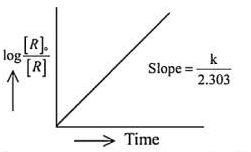
Above graph is not applicable for which of the following reaction:
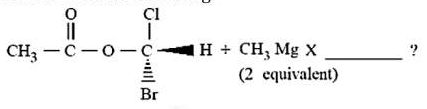
Identify the stereochemically correct product(s) formed from the following:
Which of the following curves represent a first order reaction?
A brown ring is formed in the ring test for NO3− ion. It is due to the formation of:
What product is obtained when chloroform reacts with oxygen in presence of light?


