
Question
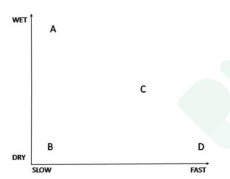
From the above table identify the type of mass movementVelocity-------$\rightarrow$ Material Slow Moderate Fast Unconsolidated material B C A Rock D
The correct answer is
A = Debris avalanche; B = Creep; C=Debris flow; D = Rockfall
Identify Mass Movement Types Using Table Data
The question requires identifying different types of mass movement based on their velocity and the type of material involved, as presented in the table.
Table Analysis
| Velocity-------→ | Material | Slow | Moderate | Fast |
| Unconsolidated material | B | C | A | |
| Rock | D |
Movement Type Identification
- A: Associated with 'Fast' velocity and 'Unconsolidated material'. This typically describes a rapid, flow-like movement of debris. Common terms include debris flow or debris avalanche.
- B: Associated with 'Slow' velocity and 'Unconsolidated material'. This signifies gradual, almost imperceptible downslope movement of soil and regolith. This is characteristic of 'Creep'.
- C: Associated with 'Moderate' velocity and 'Unconsolidated material'. This suggests a mixture of debris and finer material moving at a noticeable speed, often with significant water content. This matches 'Debris flow'.
- D: Associated with 'Fast' velocity and 'Rock'. This indicates the rapid downward movement of rock fragments. Common terms include rockfall or rock avalanche.
Matching with Options
Based on the analysis:
- A = Debris avalanche (Fast, Unconsolidated)
- B = Creep (Slow, Unconsolidated)
- C = Debris flow (Moderate, Unconsolidated)
- D = Rockfall (Fast, Rock)
This combination aligns with Option 3: A = Debris avalanche; B = Creep; C=Debris flow; D = Rockfall.
Was this answer helpful?
Important Questions from Natural Hazards
Depending on the moisture conditions and speed of mass movements shown in the diagram, identify the types of mass movements A, B, C and D
- A tsunami occurs 1000 km away from the shore in an ocean water depth of 6.25 km. The tsunami reaches the shore in about
- The velocity of a tsunami wave is dependent on
- Which one of the following options is the best way to protect yourself from lightning if you get caught in an open field during a thunderstorm?
- Which one of the following events is caused by liquefaction?
Need Expert Advice?


