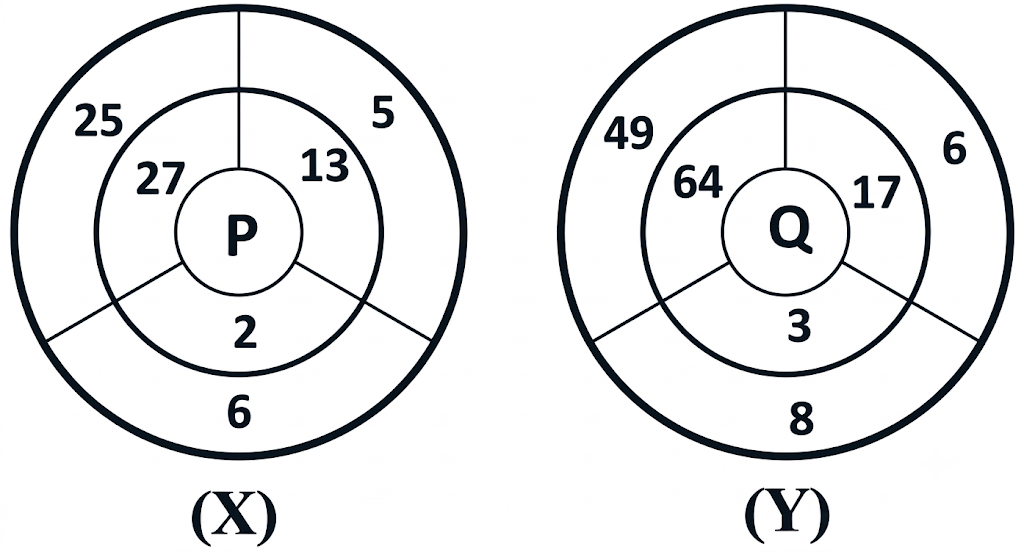
Study the given pattern carefully and select the number that is the sum of A and B. (Different operations when performed on the two numbers given in each of the squares in figure X yield the same result A. Similarly, different operations when performed on the two numbers given in each of the squares in figure Y yield the same result B.)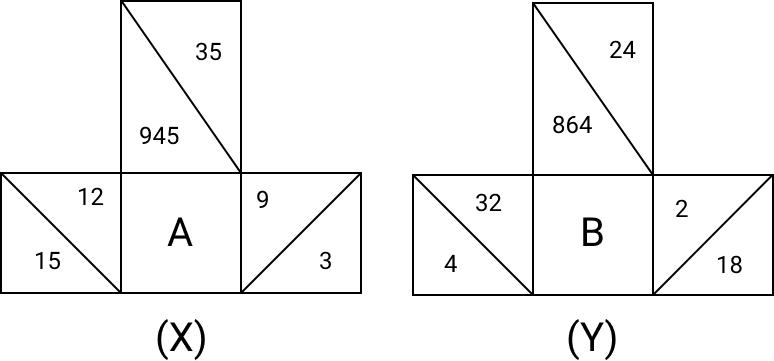
63
In each figure the three outer squares hold two numbers each, and three different operations on those pairs (division, addition and multiplication) all give the same number in the centre.
Step 1 — Figure X: \(945 \div 35 = 27\), \(12 + 15 = 27\), \(9 \times 3 = 27\). So A = 27.
Step 2 — Figure Y: \(864 \div 24 = 36\), \(32 + 4 = 36\), \(2 \times 18 = 36\). So B = 36.
Step 3 — \(A + B = 27 + 36 = 63\).
51, 49 and 75 would each need a different value of A or B, and no consistent operation on the pairs in the squares gives such values, since division, addition and multiplication already agree on 27 and 36.
63 option is correct.
Similar Questions
Study the given pattern carefully and select the number that is the sum of P and Q.
(Different operations when performed on the two numbers given in each of the sectors in figure X yield the same result P. Similarly, different operations when performed on the two numbers given in each of the sectors in figure Y yield the same result Q.)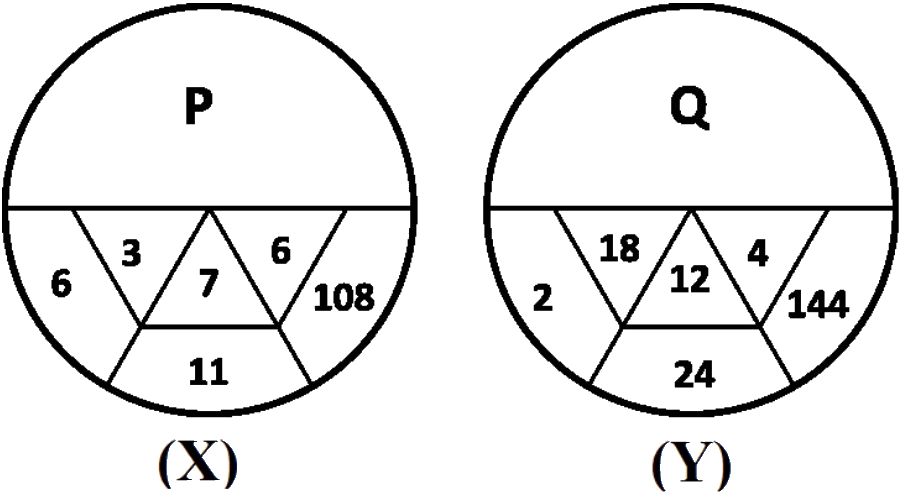
Study the given pattern carefully and select the number that is the product of P and Q. (Different operations when performed on the two numbers given in each of the sectors in figure X yield the same result P. Similarly, different operations when performed on the two numbers given in each of the sectors in figure Y yield the same result Q.)
Study the given pattern carefully and select the letters that can replace the symbols in the last figure.
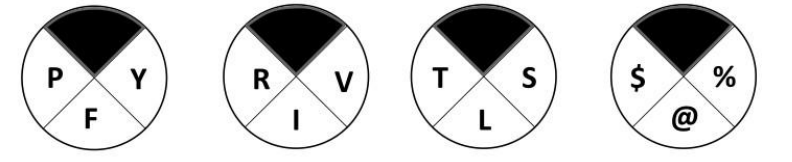
Study the given pattern carefully and select the letters that can replace the symbols in the last figure.

Important Questions from Missing Number in Diagram
- The correct alternative to complete the given analogy is :
COMMENCE: FSRSLVLO:: BEGIN:? Find the missing number in the last triangle.
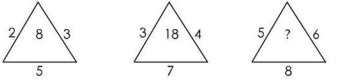
Consider the following :
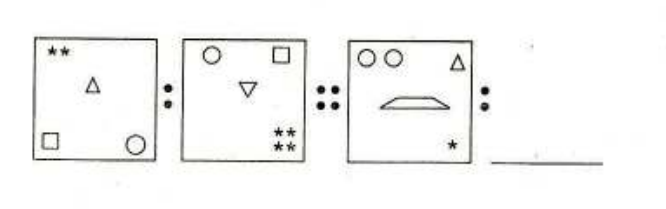
Which one of the following figures will come in the blank space ?
Consider the following diagrams:
Which one of the following is the missing number in the diagrams given above?
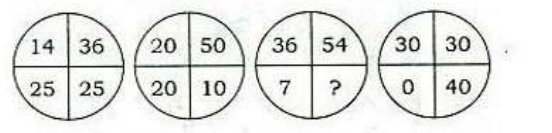
Study the given pattern carefully and select the number from among the given options that can replace the question mark (?).