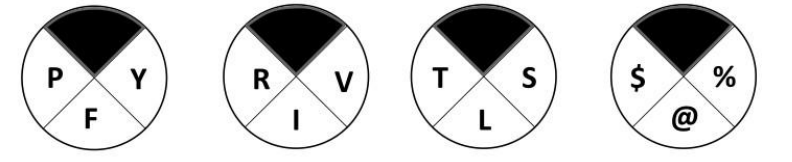
Study the given pattern carefully and select the letters that can replace the symbols in the last figure.
% =Y , \(\$\) =X , @ = X
In letter-pattern figures, each position in the figure (left, right, bottom) follows its own rule from one figure to the next, usually a fixed shift in alphabetical position.
Step 1 — The figure shows four triangles, each divided into three parts with a letter on the left, the right and the bottom. Left/right letters: L M, P Q, T U, then \(\$\) %. Bottom letters: G, D, A, then @.
Step 2 — Left letters L → P → T move forward by 4 each time (L = 12, P = 16, T = 20), so the next is 24 = X. Thus \(\$\) = X.
Step 3 — Right letters M → Q → U also move forward by 4 (13, 17, 21), so the next is 25 = Y. Thus % = Y.
Step 4 — Bottom letters G → D → A move back by 3 (7, 4, 1). Going back 3 from A wraps around the alphabet: A (1) → Z → Y → X, so @ = X.
The combinations with S, O and M; with N, C and F; and with Y, U and Z do not follow these rules: \(\$\) must be X (not O, C or U) and @ must be X (not M, F or Z).
% =Y , \(\$\) =X , @ = X option is correct.
Similar Questions
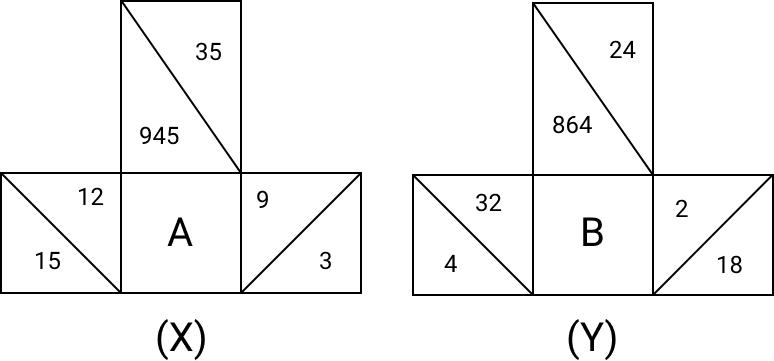
Study the given pattern carefully and select the number that is the sum of A and B. (Different operations when performed on the two numbers given in each of the squares in figure X yield the same result A. Similarly, different operations when performed on the two numbers given in each of the squares in figure Y yield the same result B.)
Study the given pattern carefully and select the letters that can replace the symbols in the last figure.
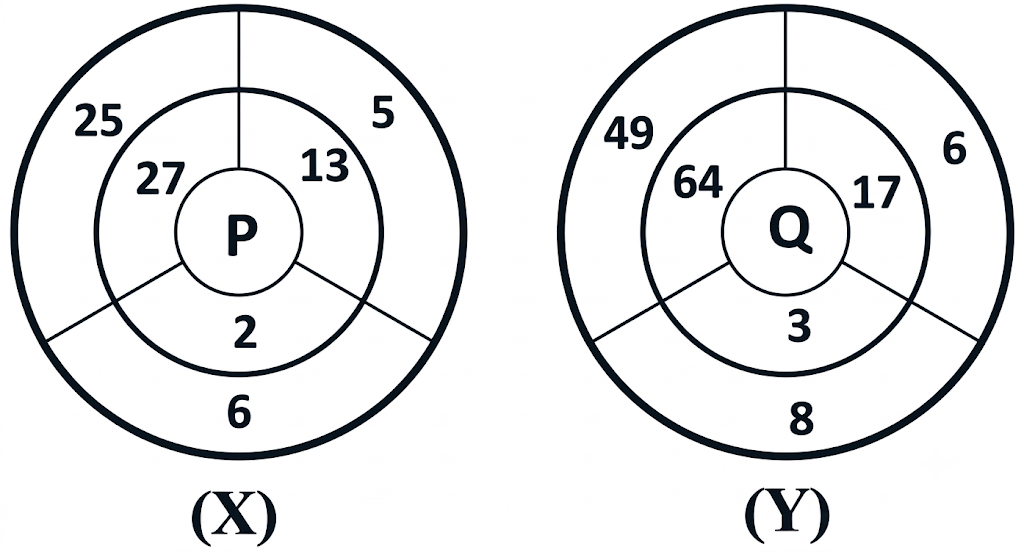
Study the given pattern carefully and select the number that is the product of P and Q. (Different operations when performed on the two numbers given in each of the sectors in figure X yield the same result P. Similarly, different operations when performed on the two numbers given in each of the sectors in figure Y yield the same result Q.)
Study the given pattern carefully and select the number that is the sum of P and Q.
(Different operations when performed on the two numbers given in each of the sectors in figure X yield the same result P. Similarly, different operations when performed on the two numbers given in each of the sectors in figure Y yield the same result Q.)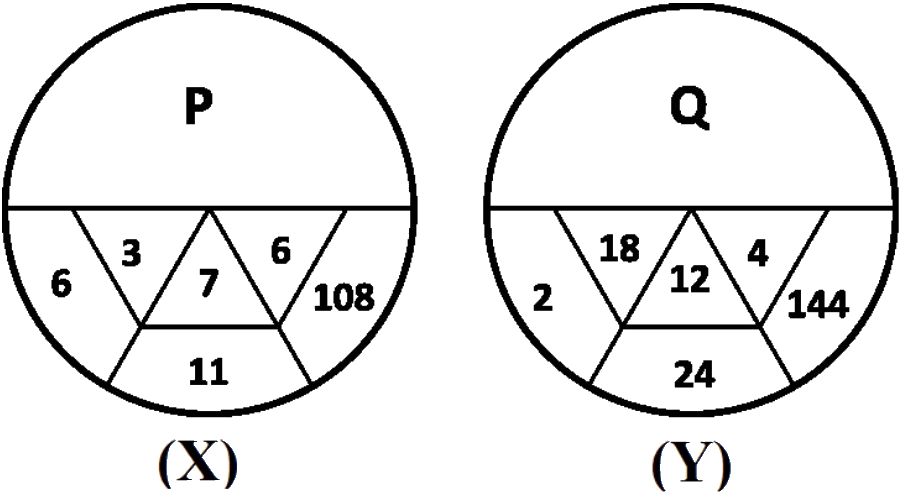
Important Questions from Missing Number in Diagram
Study the given pattern carefully and select the number that can replace the question mark (?) in it.
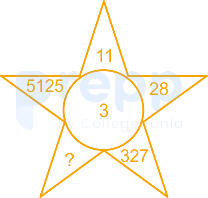
Study the given pattern carefully and select the number that can replace the question mark (?) in it:
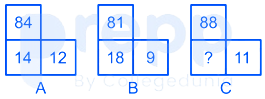
13 108 11 26 55 9 ? 157 14 In the given square, which option will replace the question mark?
4A
6C
2E
6P
13R
7T
8N
10P
?
What is the value of the missing number?
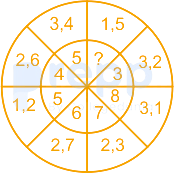
Assuming that the numbers in each of the following figures follow a similar pattern, select the option that can replace the question mark (?) in figure C.