LIST-I LIST-II A. Water is boiling in open vessel I. Conduction in one dimension. B. At night exchange of heat between atmosphere and earth II. Conduction and convection occurring simultaneously. C. Loss of heat occurring through wall of furnace III. Thermal radiation. D. Heat sink used to cool circuit component IV. Dominant natural convection.
Choose the correct answer from the options given below:
Matching Heat Transfer Mechanisms
This question requires matching scenarios involving heat transfer (LIST-I) with the dominant heat transfer mechanism or condition (LIST-II).
Analysis of Scenarios:
- A. Water boiling in open vessel: Boiling involves significant fluid movement as vapor bubbles rise. This process is characterized by vigorous heat transfer and is dominated by natural convection. Thus, A matches with IV. Dominant natural convection.
- B. Night exchange of heat between atmosphere and Earth: At night, objects on Earth, including the surface, cool down by emitting thermal energy outwards. This emission into space or the cooler atmosphere primarily occurs through thermal radiation. Thus, B matches with III. Thermal radiation.
- C. Loss of heat through furnace wall: Heat transfer through the solid material of a furnace wall occurs via conduction. Assuming uniform temperature distribution across the thickness and heat flow primarily in one direction, it is approximated as conduction in one dimension. Thus, C matches with I. Conduction in one dimension.
- D. Heat sink used to cool circuit component: A heat sink transfers heat from a component to the surrounding air. This involves heat conduction from the component to the heat sink and then convection from the heat sink's fins to the air. Therefore, both conduction and convection occur simultaneously. Thus, D matches with II. Conduction and convection occurring simultaneously.
Correct Matching:
Based on the analysis, the correct matching is:
- A - IV
- B - III
- C - I
- D - II
This corresponds to the option A-IV, B-III, C-I, D-II.
Similar Questions
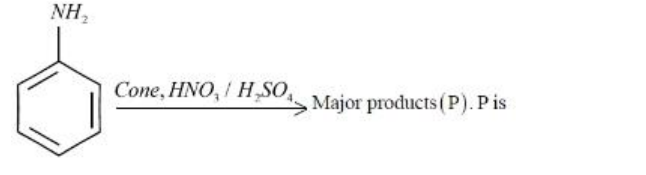
Choose the correct answers from the options given below:
A.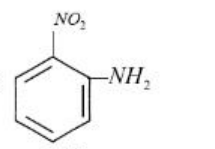
B.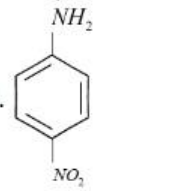
C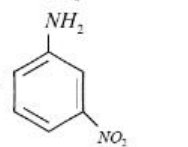
D.
- Match the LIST-I with LIST-II
LIST-I LIST-II A. Waste water plant sludge I. Making dry ice B. Ash from electric power plant II. Nullification and revival for recycling C. $CO_2$ released via fermentation III. Biogas yield D. Acid released from industry IV. Cement raw material
Choose the correct answer from the options given below: - Match the LIST-I with LIST-II
LIST-I LIST-II A. Impeller I. Fluid motion occurring poorly. B. Cavitation II. Energy is provided to fluid via rotation. C. Priming (PRIMING) III. Vapour bubble collapse and formation. D. Dead Zone IV. Clearing suction line of air before start.
Choose the correct answer from the options given below: - Match the LIST-I with LIST-II
LIST-I LIST-II A. Quaternary structure I. Folding of protein in wet environment B. Hydrophobic interaction II. Multiple polypeptide chain assembly C. Crabtree effect III. Oxygen causes glycolysis suppression D. Pasteur effect IV. High glucose causes respiration inhibition
Choose the correct answer from the options given below: - Match the LIST-I with LIST-II
LIST-I LIST-II A. Gilliland correlation I. With time no accumulation B. Relative volatility II. Difficulty in separation measurement C. Steady state diffusion III. Separation ease D. Number of transfer unit (NTU) IV. Reflux Ratio and stages relation
Choose the correct answer from the options given below: - Match the LIST-I with LIST-II
LIST-I LIST-II A. Entrophy I. $\left(\frac{\partial U}{\partial T}\right)_V$ B. $C_P$ II. $\left(\frac{\partial T}{\partial P}\right)_H$ C. $C_V$ III. $\frac{\partial q}{T}$ D. Joule-Thomson Expansion Co-efficient IV. $\left(\frac{\partial H}{\partial T}\right)_P$
Choose the correct answer from the options given below: - Match the LIST-I with LIST-II
LIST-I LIST-II A. Polybutadiene I. Resin B. Polypropylene II. Fibre C. PF (Phenol formaldehyde) III. Rubber D. Nylon 66 IV. Plastics
Choose the correct answer from the options given below: - Match the LIST-I with LIST-II
LIST-I LIST-II A. Isothermal I. $\text{ds} = 0$ B. Isochoric II. $\text{du} = 0$ C. Adiabatic reversible III. $\text{dw} = 0$ D. Adiabatic IV. $\text{dq} = 0$
Choose the correct answer from the options given below: - Match the LIST-I with LIST-II
LIST-I LIST-II A. PU I. Oil seal B. UPVC II. Tyre C. NBR III. Shoe-sole D. NR IV. Window-panel
Choose the correct answer from the options given below: Match the LIST-I with LIST-II
LIST-I
FuelsLIST-II
Calorific Value (kJ/)A. Peat I. 45000 B. Petrol II. 30000 C. Anthracite coal III. 50000 D. Natural gas IV. 6500
Choose the correct answer from the options given below:
Important Questions from Mixed Topic (CUET PG)
- Who was the founder of Bolshevik Communist party?
- What is the key guide to statecraft in the realist tradition?
- Chronologically arrange the events in the Cold War period.
A. Berlin Wall is constructed
B. Communist China joins the UN
C. Soviet invasion of Czechoslovakia
D. Berlin Blockade
Choose the correct answer from the options given below: Morgenthau's principles of political realism are:
A. Politics is rooted in permanent and unchanging human nature which is basically self centred, self-regarding and self-interested
B. Politics is an autonomous sphere of action and cannot therefore be reduced to morals
C. International Politics is an arena of conflicting self-interests
D. The ethics of international relations is situational ethics which is very different from private morality
Choose the correct answer from the options given below:Who among the following political thinkers consider the anarchical self help system to be a compelling factor for States to maximise their relative power positions?