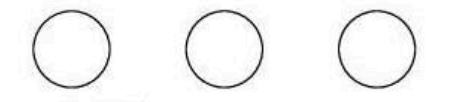
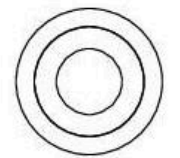
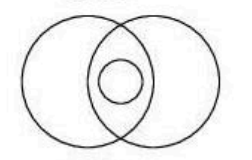
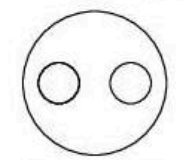
LIST-I LIST-II A. Cognitive Maps I. Kohler B. Insight Learning II. Pavlov C. Puzzle Box III. Tolman D. Classical Conditioning IV. Thorndike
Choose the correct answer from the options given below:
Match Learning Theorists and Concepts
This question requires matching key concepts in learning psychology with their primary proponents. We will analyze each item in LIST-I and find its corresponding theorist in LIST-II.
Cognitive Maps and Tolman
Cognitive Maps were proposed by Edward Tolman. He suggested that animals (like rats in mazes) form mental representations of their environment, rather than just responding to stimuli.
- A. Cognitive Maps corresponds to III. Tolman
Insight Learning and Köhler
Insight Learning is characterized by a sudden understanding or solution to a problem, often after a period of contemplation. Wolfgang Köhler's experiments with chimpanzees demonstrated this phenomenon.
- B. Insight Learning corresponds to I. Kohler
Puzzle Box and Thorndike
Edward Thorndike used Puzzle Boxes extensively in his research on animal learning. His work led to the formulation of the Law of Effect, which is foundational to behaviorism.
- C. Puzzle Box corresponds to IV. Thorndike
Classical Conditioning and Pavlov
Classical Conditioning, the learning of associative responses, is famously associated with Ivan Pavlov and his experiments involving dogs and salivation.
- D. Classical Conditioning corresponds to II. Pavlov
Final Matching and Correct Option
Compiling the matches:
- A - III
- B - I
- C - IV
- D - II
This sequence (A-III, B-I, C-IV, D-II) matches the correct pairings.
Therefore, the correct option is 4.
Similar Questions
- Which of the following test is Not one of the tests used in Differential Aptitude Test?
- Given below are two statements: one is labelled as Assertion A and the other is labelled as Reason R.
Assertion A: When a flexor muscle is excited, the probability of excitation decreases in the paired extensor muscle.
Reason R: The interneuron that excited a motor neuron to the flexor muscle also inhibited a motor neuron connected to the extensor muscle.
In the light of the above statements, choose the most appropriate answer from the options given below: - Arrange the order in which the following ability scales are ordered in Luria Nebraska Neuropsychological Battery from C1 onwards:
A. Visual
B. Expressive speech
C. Motor
D. Memory
E. Tactile
Choose the correct answer from the options given below: - Arrange the following steps of calculating partial and multiple correlation co-efficient for a 3-variable problem from start to end:
A. Computing partial r's.
B. Writing the regression equations.
C. Computing of partial regression co-efficients.
D. Computing the partial r's.
E. Computation of multiple correlation co-efficient, R.
Choose the correct answer from the options given below: - Some major milestone events of development of psychology in India are given below. Arrange them in chronological order:
A. The first doctorate in psychology awarded at Calcutta University.
B. A separate Applied Psychology section was added in Calcutta University.
C. Formation of Indian Psychological Association.
D. Publication of Indian Journal of Psychology.
E. Psychology teaching started at masters level in Calcutta University.
Choose the correct answer from the options given below: - Which of the following is the broad field of psychology in which psychological knowledge is brought to bear upon social problems and the attempts of people to adapt to their work and living groups?
- Little Alice is doing badly in school, and her parents bring her to the psychologist to find out why. The psychologist would use which of the following methods in this case?
- Who among the following philosophers attempted to resolve mind-body problem?
- Which of the following scientists devised the doctrine of specific nerve energies by expanding Bell-Magendie Law?
- What was the subject matter of psychology according to Edward Bradford Titchner?
Important Questions from Miscellaneous
- Which of the following relationships is/are not true?
(A). Most probable velocity = $\sqrt{\frac{2RT}{M}}$
(B). PV = $\frac{3}{2}kT$
(C). Compressibility factor Z = $\frac{pV}{nRT}$
(D). Average kinetic energy of gas = $\frac{1}{2}kT$
Choose the correct answer from the options given below - Match List-I with List-II
List-I List-II Electronic Configuration First Ionisation energy (kJ mol$^{-1}$) (A). ns$^2$ (I). 2100 (B). ns$^2$np$^1$ (II). 1400 (C). ns$^2$np$^3$ (III). 800 (D). ns$^2$np$^6$ (IV). 900
Choose the correct answer from the options given below: - The shielding constant of a 2p electron (calculated using Slater's rules) is
- Match List-I with List-II
List-I List-II Spectroscopy Property (A). Raman (I). Polarizability (B). FTIR (II). Dipole Moment (C). UV-Visible (III). Absorbance (D). NMR (IV). Spin
Choose the correct answer from the options given below: - The structure of protein comprises of:
(A). Primary structure of protein is associated with amino acids
(B). Secondary structure of protein is associated to peptides
(C). Tertiary structure of protein is associated with polypeptide chains
(D). Quaternary structure of protein is associated with polypeptide chains
Choose the correct answer from the options given below: