
LIST-I Input LIST-II Compiler Phase A. Syntax Tree I. Code Generator B. Character Stream II. Syntax Analyzer C. Intermediate Representation III. Semantic Analyzer D. Token Stream IV. Lexical Analyzer
Matching Compiler Concepts to Phases
This question requires matching concepts from LIST-I with the corresponding phases of a compiler listed in LIST-II. The correct matching is determined by understanding the role of each phase.
A. Syntax Tree matched with III. Semantic Analyzer
The Syntax Tree represents the grammatical structure of the code. The Semantic Analyzer processes this tree to check for type consistency, variable declarations, and other meaning-related rules.
B. Character Stream matched with IV. Lexical Analyzer
The Character Stream is the raw sequence of input characters from the source code. The Lexical Analyzer (also known as the scanner) reads this stream to identify and group characters into meaningful tokens.
C. Intermediate Representation matched with I. Code Generator
Intermediate Representation (IR) is a representation of the source code that is machine-independent but closer to machine code than the source. The Code Generator phase takes this IR as input to produce the final target machine code.
D. Token Stream matched with II. Syntax Analyzer
The Token Stream is the sequence of tokens produced by the Lexical Analyzer. The Syntax Analyzer (also known as the parser) takes this stream as input to verify the grammatical structure according to the language's rules, often building a syntax tree.
Final Matching
Based on the analysis, the correct matches are:
- A -> III (Syntax Tree -> Semantic Analyzer)
- B -> IV (Character Stream -> Lexical Analyzer)
- C -> I (Intermediate Representation -> Code Generator)
- D -> II (Token Stream -> Syntax Analyzer)
This corresponds to the option A-III, B-IV, C-I, D-II.
Important Questions from Code Optimization
Consider the control flow graph given below.
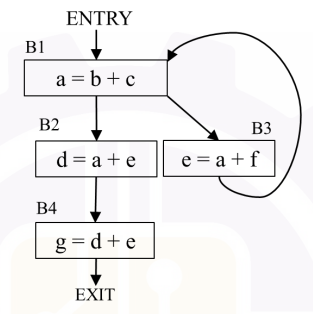
Which one of the following options is the set of live variables at the exit point of each basic block?- Which of the following is the correct High level code for the given TAC in the passage
- What are the various LEADERS (leading statements) for the TAC given in the passage?
- What all blocks does Block 3 & Block 5 dominate in the Flow graph for the TAC given in the passage?
- In _______, the bodies of the two loops are merged together to form a single loop provided that they do not make any references to each other.


