
Question
In the entry prevention model of Bain, firms charge premium over
The correct answer is
Long period competitive price
Bain's Entry Prevention Model Pricing
Bain's entry prevention model focuses on how established firms deter potential competitors from entering the market. This strategy involves pricing decisions.
Key Pricing Strategy:
- Firms charge a price that is higher than the theoretical long period competitive price.
- This premium pricing aims to signal potential profitability to outsiders, making the market look attractive.
- However, the price is kept below the monopoly level, acting as a barrier designed to make entry seem less worthwhile in the long run, considering potential reactions from the incumbent.
Analysis of Options:
- Long period competitive price: This represents the benchmark price under sustained competition. Charging a premium over this level is the core strategy in Bain's model to deter entry.
- Short period competitive price: This price fluctuates based on short-term market conditions and is not the basis for long-term entry deterrence strategy described by Bain.
- Lowest average cost: While firms aim for efficiency, pricing strategy in this model is about deterring entry relative to potential profits, not solely about matching the lowest possible cost.
Conclusion:
The model suggests incumbents price above the long period competitive price to prevent new firms from entering.
Was this answer helpful?
Important Questions from Consumer behaviour
In the above diagram, the consumer surplus is represented by the area of :
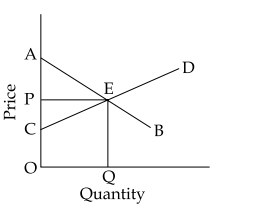
- Organization responsible for preventing unfair or deceptive trade practices in textile and textile products is :
- The urge to possess and consume for display of wealth is called :
- Which of the following factors favour fashion ?
(a) Leisure
(b) An economy of abundance
(c) Transportation and communication
(d) Low income
(e) Sumptuary laws
Code : - Arrange the following Acts in the ascending order of their years of enactment :
(a) Environmental Protection Act
(b) MRTP
(c) PFA
(d) ISI Certification Marks Act
(e) Air Pollution Act
Need Expert Advice?


