Perspective Cylindrical Projection: Point of Light
Perspective cylindrical projection is a type of map projection where points on a sphere (the generating globe) are projected onto a cylinder. In a perspective projection, the projection lines all converge at a single point, known as the point of light or center of projection.
Identifying the Projection Point of Light
For a perspective cylindrical projection, the specific location of this point of light determines the characteristics of the resulting map projection. The question asks to identify this point concerning the 'generating globe'.
- The projection involves casting light rays from the point of light through points on the generating globe onto the projection surface (in this case, a cylinder).
- In standard definitions of perspective cylindrical projections, especially those used in cartography, the point of light is located at the centre of the generating globe.
- Lines are drawn from this center, passing through points on the globe's surface, and intersecting the cylinder to form the projected image.
Therefore, the point of light required to cast the image in a perspective cylindrical projection is the centre of the generating globe.
Answer Analysis
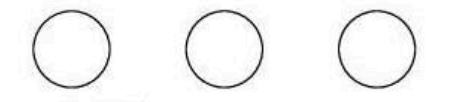
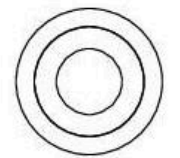
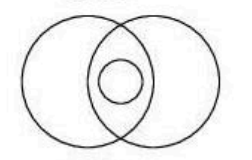
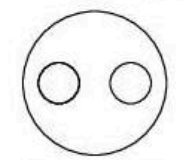
Comparing this with the options provided:
- Option 1 is incorrect.
- Option 2 is relevant for specific parallel projections, not typically perspective ones.
- Option 3 correctly identifies the point of light as the centre of the generating globe.
- Option 4 describes the point of tangency, not the center of projection for this type.
The correct option is C.
Similar Questions
- Which of the following laid great emphasis on livid experience and also on the perception of space by social categories based on ethnicity, race and religion, etc. ?
- Who defined human geography as the study of the changing relationship between the unresting man and unstable Earth ?
- Who remarked that "Asia has many places where people are few and few places where people are very many" ?
- What type of rural settlements are commonly found in the eastern and north-eastern parts of Rajasthan?
- Which of the following map serves as a guide to small units like battalions and patrol units prior to and during the movement anywhere near the front line ?
- Identify the scale of topographical sheet No. 71E/NW.
- Which of the following will be most suitable two standard parallels when the area to be represented extends from $20^{\circ}\text{S}$ to $80^{\circ}\text{S}$ ?
- Based on which of the following, it can be said that the biological processes which operate today might have operated in the past though with varying degree of relationship between biological communities and physical environment and between organisms ?
- Which of the following is characterised by two or three layered crowns of trees, numerous epiphytes, a wide variety of species and little vegetation on the ground ?
- Identify the name of the movement which successfully highlighted the adverse impact of mining activities in the Western Ghats ?
Important Questions from Mixed Topic (CUET PG)
- Kalpsutra, the illustrated canonical text is from:-
- The Harappan city almost exclusively devoted to craft production was-:
- Mohandas Karamchand Gandhi launched quit India movement after the failure of:-
- The "Objectives Resolution" was introduced in constituent assembly by:-
- Who among the following was not a member of the constituent assembly:-