
Understanding RC Filter Roll-off
A filter constructed using a single resistor (R) and a single capacitor (C) is known as a first-order filter. These simple filters are fundamental in electronics for frequency selection.
Filter Order and Roll-off Rate
The 'order' of a filter describes how sharply it attenuates signals outside its passband. A single R and C combination constitutes a first-order filter. The roll-off rate quantifies this attenuation steepness.
Roll-off Rate Expressions
The rate at which the filter's gain decreases beyond the cutoff frequency is called the roll-off rate. For a first-order RC filter, this rate is consistently:
- -20 dB/decade: This means for every tenfold increase in frequency above the cutoff, the signal power is reduced by 20 decibels (or the voltage/current is reduced by a factor of 10).
- -6 dB/octave: This is an equivalent way to express the same roll-off. An octave represents a doubling of frequency. A change of one decade contains approximately 3.32 octaves. The rate of -20 dB/decade is mathematically equivalent to -6 dB/octave (since $-20 / \log_{10}(2) \approx -60$ and $-6 \times \log_{10}(10) = -6$, wait, the conversion is simpler: -20 dB per 10x frequency change means -6 dB per 2x frequency change).
Therefore, both expressions accurately describe the characteristic roll-off of a simple RC filter.
Important Questions from Filters
The active filter works well
A band pass filter response has :
(a) Two critical frequencies
(b) Quality factor depends on the center frequency and the bandwidth
(c) Quality factor depends on the critical frequencies
(d) A voltage gainOptions :
A phase locked loop (PLL) consists of :
Which among the following has a frequency selective amplifier whose gain decreases from a finite value to zero as the frequency of the sinusoidal input increases from dc to infinity?
The direct form structure of an FIR (finite impulse response) filter is shown in the figure.
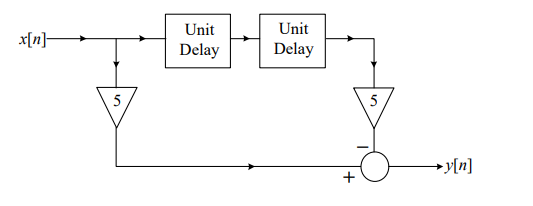
The filter can be used to approximate a


