Indole Reaction Mechanism
The reaction between indole, sodium amide ($NaNH$_2$), and benzenesulfonyl chloride ($PhSO$_2$Cl$) proceeds via nucleophilic substitution.
- Step 1: Deprotonation
Sodium amide ($NaNH$_2$) is a strong base that abstracts the acidic proton from the indole nitrogen. This generates the indolate anion, a potent nucleophile.
Reaction: Indole-NH + NaNH$_2$ $\rightarrow$ [Indole-N]$^-$ Na$^+$ + NH$_3$ - Step 2: Nucleophilic Attack
The indolate anion attacks the electrophilic sulfur atom of benzenesulfonyl chloride ($PhSO$_2$Cl$). - Step 3: Substitution
The chloride ion (Cl$^-$) is eliminated as a leaving group, forming the N-sulfonylated indole derivative.
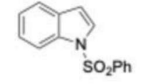
Product: Indole-N-SO$_2$Ph (N-(phenylsulfonyl)indole)
Product Identification
The strong base $NaNH$_2$ directs the reaction to the nitrogen atom of indole. The electrophile $PhSO$_2$Cl$ then reacts at this nitrogen. Therefore, the phenylsulfonyl group ($PhSO$_2$-$) attaches to the N1 position of the indole ring.
Option 4 correctly depicts this N-substitution product, N-(phenylsulfonyl)indole.
| Option | Structure | Analysis |
| 1 | 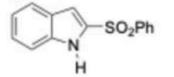 |
Incorrect (C3 substitution) |
| 2 | 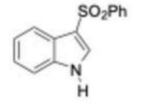 |
Incorrect (C2 substitution) |
| 3 | 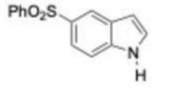 |
Incorrect (Benzene ring substitution) |
| 4 | |
Correct (N1 substitution) |
Important Questions from Heterocyclic Compounds
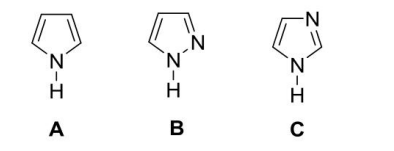
The correct order of basicity for the following heterocycles is
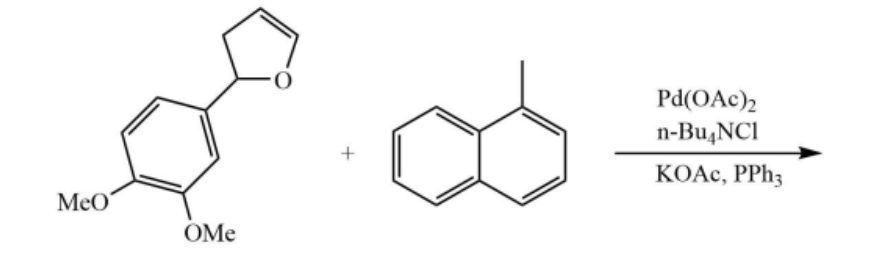
The major product formed in the following reaction is
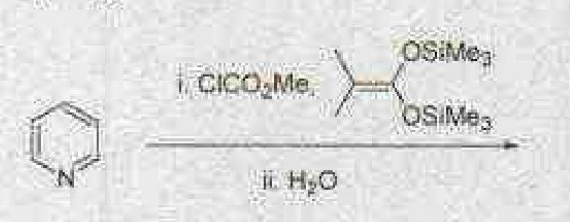
The major heterocyclic compound formed in the following reaction is
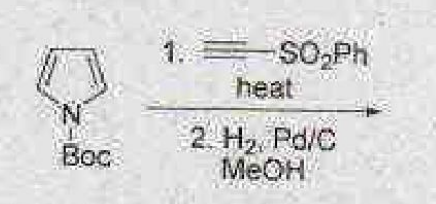
The mechanism of acid catalyzed hydrolysis of benzonitrile involves
The major product formed in the following reaction is