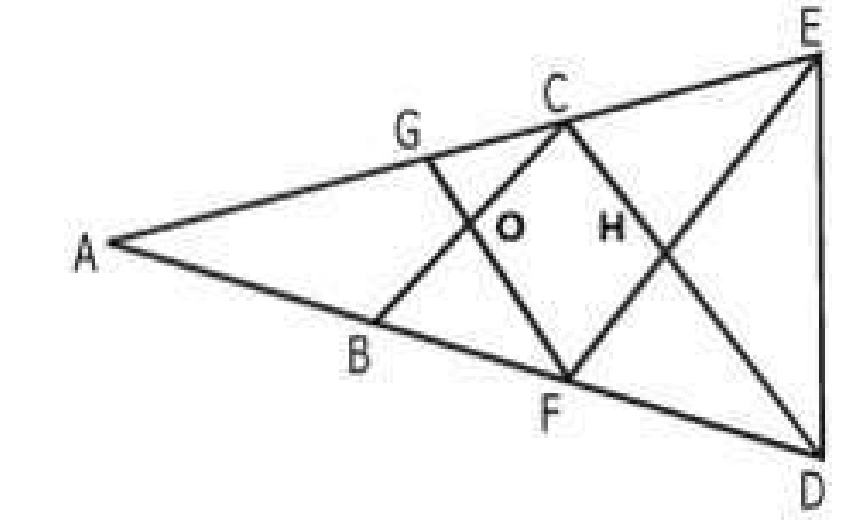
Find the number of triangles in the given figure.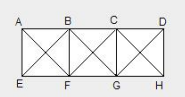
To find the total number of triangles in the figure, we need to count the triangles in each section of the diagram systematically.
The diagram is a rectangle divided into smaller sections with diagonals drawn.
Each small rectangle (e.g., ABFE, BCGF, CDHG) is divided by diagonals into 4 smaller triangles. Since there are 3 such rectangles, we have:
\(3 \times 4 = 12\) triangles
Consider triangles formed by extending lines across multiple sections. Each pair of adjacent sections shares additional triangles:
Triangles including points B, C: 2 additional triangles
Triangles including points F, G: 2 additional triangles
The entire rectangle ABCD is divided into triangles by its diagonals:
Additional 4 triangles
Consider triangles that span the entire figure (e.g., ACD, AHE):
There are 8 such triangles.
By summing all the triangles found in the above steps, we get the total number of triangles:
\(12 + 4 + 4 + 8 = 28\)
Therefore, the number of triangles in the figure is 28.
Similar Questions
Find the number of squares in the given figure.
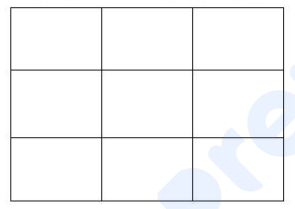
Find the total number of straight lines in the following figure.
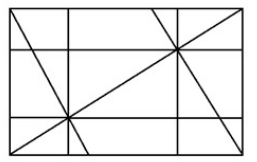
How many squares are there in the given figure?
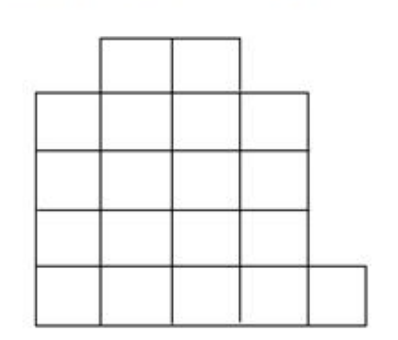
Find the number of straight lines required to make the given figure.
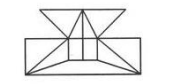
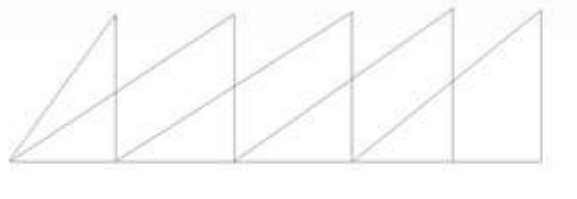
Find the total no of triangles in the given figure.
Important Questions from Counting Figures
How many triangles are there in the given figure?
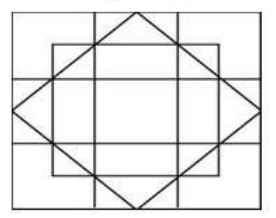
How many triangles are there in the given figure?

How many triangles are there in the given figure?
Select the option that represents the letters that, when sequentially placed from left to right in the blanks below, will complete the letter series.
D _ A _ W _ S _ E W _ S A E _ D _ A E _How many triangles are there in the given figure?