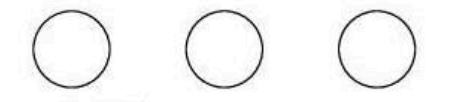
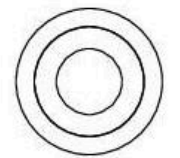
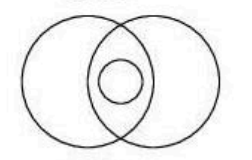
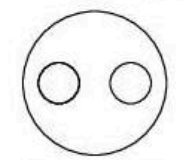
A. Physical well-being
B. Mental well-being
C. Social well-being
D. Political stability and conflicts
Choose the most appropriate answer from the options given below :
WHO Definition of Health Components
The World Health Organization (WHO) defines health as a state of complete physical, mental, and social well-being, not merely the absence of disease or infirmity.
Key Elements of Health Definition
- Physical well-being (A): This refers to the overall condition of the body and its ability to function properly.
- Mental well-being (B): This encompasses emotional and psychological health, including cognitive function and emotional stability.
- Social well-being (C): This relates to an individual's ability to interact positively with others and function effectively within their community and environment.
Exclusion from WHO Definition
Political stability and conflicts (D) are not directly included as components in the WHO's core definition of health. While political factors can significantly influence physical, mental, and social well-being, they are considered external determinants rather than intrinsic parts of the health state itself.
Conclusion
Based on the WHO's definition, the elements included are Physical well-being (A), Mental well-being (B), and Social well-being (C).
Therefore, the most appropriate answer includes options A, B, and C only.
Similar Questions
Match List - I with List - II.
List - I (Concept) List - II (Major focus) A Public Health I Science and art of preventing disease prolonging life and promoting health B Equality II Provide healthcare as per need C State Medicine III Providing equal healthcare for all D Equity IV The administration and centre of health care services by the State Government Choose the correct answer from the options given below :
- Which of the following are dimensions of health ?
A. Physical
B. Mental
C. Economic
D. Social
E. Spiritual
Choose the most appropriate answer from the options given below : - What is the full form of WHO ?
- Germ theory was proposed by whom ?
- Who is considered as father of public health ?
- The public health definition includes which of the following elements ?
A. Prolonging Life
B. Prevention of financial frauds
C. Preventing Disease
D. Promoting Health
E. Employment opportunity
Choose the most appropriate answer from the options given below : - Given below are two statements : one is labelled as Assertion (A) and the other is labelled as Reason (R).
Assertion (A) : Wind is an active force for ventilation.
Reason (R) : Back to back construction of houses do not permit cross ventilation.
In the light of the above statements, choose the most appropriate answer from the options given below : - Smog is created by fusion of the following :
- Choose the correct order of sequence for modern sewage treatment :
A. Primary sedimentation
B. Screening
C. Grit removal
D. Sludge Disposal
Choose the correct answer from the options given below : - Which of the following is not considered as air pollutant ?
Important Questions from Miscellaneous
- Which of the following relationships is/are not true?
(A). Most probable velocity = $\sqrt{\frac{2RT}{M}}$
(B). PV = $\frac{3}{2}kT$
(C). Compressibility factor Z = $\frac{pV}{nRT}$
(D). Average kinetic energy of gas = $\frac{1}{2}kT$
Choose the correct answer from the options given below - Match List-I with List-II
List-I List-II Electronic Configuration First Ionisation energy (kJ mol$^{-1}$) (A). ns$^2$ (I). 2100 (B). ns$^2$np$^1$ (II). 1400 (C). ns$^2$np$^3$ (III). 800 (D). ns$^2$np$^6$ (IV). 900
Choose the correct answer from the options given below: - The shielding constant of a 2p electron (calculated using Slater's rules) is
- Match List-I with List-II
List-I List-II Spectroscopy Property (A). Raman (I). Polarizability (B). FTIR (II). Dipole Moment (C). UV-Visible (III). Absorbance (D). NMR (IV). Spin
Choose the correct answer from the options given below: - The structure of protein comprises of:
(A). Primary structure of protein is associated with amino acids
(B). Secondary structure of protein is associated to peptides
(C). Tertiary structure of protein is associated with polypeptide chains
(D). Quaternary structure of protein is associated with polypeptide chains
Choose the correct answer from the options given below: