
Who is known as the father of AI?
John McCarthy
The question asks about the individual recognized as the father of Artificial Intelligence (AI). Identifying the founder or a key pioneer in a field is important for understanding its history and development.
Understanding the Question: Who is the Father of AI?
Artificial Intelligence, often abbreviated as AI, is a field of computer science dedicated to creating systems that can perform tasks typically requiring human intelligence. These tasks include learning, problem-solving, perception, and decision-making. The question seeks to identify the person credited with founding or being a major driving force in the early days of AI research.
Analyzing the Options for the Father of AI
Let's look at the options provided:
- Fisher Ada
- Alan Turing
- John McCarthy
- Allen Newell
Each of these individuals made significant contributions to computer science and related fields, but only one is widely acknowledged as the father of AI in the specific sense of coining the term and helping to launch the formal field of study.
Contributions of Key Pioneers in Artificial Intelligence
Several researchers played crucial roles in the genesis of Artificial Intelligence. It's helpful to understand their impact:
- Alan Turing: A brilliant mathematician and computer scientist, Turing is famous for the Turing Machine concept and the Turing Test, a measure of a machine's ability to exhibit intelligent behavior equivalent to, or indistinguishable from, that of a human. While a foundational figure in computing and thinking about machine intelligence, he is not typically referred to as the father of AI.
- John McCarthy: A computer scientist who spent most of his career at Stanford University. He is widely recognized for several key contributions, most notably for coining the term "Artificial Intelligence" in 1955. He was also instrumental in organizing the Dartmouth Workshop in 1956, a landmark event considered the birthplace of AI as an academic field. He also invented the Lisp programming language.
- Allen Newell: A researcher at RAND Corporation and Carnegie Mellon University. Along with Herbert Simon, he created the Logic Theorist (1955) and the General Problem Solver (1959), early AI programs designed to simulate human problem-solving skills. They were pioneers in AI research but not the one who coined the term.
- Fisher Ada: This name appears to be a combination, possibly referring to Ada Lovelace (considered the first computer programmer) or Ronald Fisher (a statistician), neither of whom are associated with founding the field of Artificial Intelligence in the mid-20th century.
Based on the historical role of coining the term and organizing the foundational workshop, John McCarthy is credited as the father of AI.
| Individual | Key Association with AI | Considered "Father of AI"? |
|---|---|---|
| Fisher Ada | Not a recognized pioneer in founding AI | No |
| Alan Turing | Turing Test, foundational concepts of computing and machine intelligence | No (Considered a major precursor/visionary) |
| John McCarthy | Coined the term "Artificial Intelligence", organized Dartmouth Workshop | Yes (Widely acknowledged) |
| Allen Newell | Developed early AI programs (Logic Theorist, GPS) | No (Considered a pioneer) |
Conclusion: Identifying the Father of Artificial Intelligence
Considering the historical context and the significant roles played by these pioneers, John McCarthy's specific actions in naming the field and bringing researchers together at the Dartmouth Workshop solidify his position as the father of AI.
Therefore, the person known as the father of AI is John McCarthy.
Important Questions from Miscellaneous
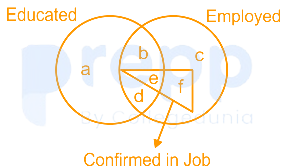
Read the given figure and find the region representing persons who are educated and employed but not confirmed in job.
The magazine in which Mahatma Gandhi mentioned what he wanted the Constitution to do is:
Which gas shields the surface of the earth from ultraviolet radiation from the sun?
Which event is marked as an Intangible Cultural Heritage of Humanity by UNESCO?
Who has been conferred with the rank of the Commander of the Order of the British Empire in 2018?


