
Which one of the following tests measures the applicant's capacity to learn the skill required for a job?
Aptitude test
Understanding Tests for Job Applicants
When companies look for new employees, they often use different types of tests to help them decide who is the best fit for a job. These tests measure various aspects of an applicant, such as their knowledge, personality, interests, or potential to learn new skills.
Analyzing the Options
Let's look at what each type of test mentioned in the options measures:
- Aptitude test: This type of test is designed to measure a person's potential or capacity to learn or acquire a specific skill or set of skills. It assesses innate ability or talent for a particular area, indicating how well someone is likely to perform after training or experience.
- Interest test: An interest test measures a person's preferences and dislikes. It helps identify careers or jobs that align with an individual's interests, suggesting what they might find enjoyable or motivating, but it does not measure their ability to learn the required skills.
- Intelligence test: Also known as an IQ test, this measures general cognitive ability, including reasoning, problem-solving, and critical thinking. While general intelligence is related to the ability to learn, an aptitude test is more focused on the potential for specific skills required for a particular job.
- Personality test: This test assesses an individual's character traits, temperament, and typical ways of behaving. It helps understand how a person might fit into the company culture or team dynamics, but it does not measure their capacity to learn specific job skills.
Identifying the Correct Test Type
The question asks for the test that measures an applicant's capacity to learn the skill required for a job. Based on our analysis:
- An aptitude test directly measures potential and capacity to learn skills relevant to a specific job or field.
- An interest test measures preferences.
- An intelligence test measures general cognitive ability.
- A personality test measures behavioral traits.
Therefore, the test that specifically focuses on the potential to learn job-related skills is the aptitude test.
Conclusion
An aptitude test is the most suitable type of test for measuring an applicant's capacity to learn the skills needed for a job. It helps employers predict how well an individual might perform after receiving necessary training.
| Test Type | What it Measures | Relation to Job Skills Learning Capacity |
|---|---|---|
| Aptitude Test | Potential/Capacity to Learn Specific Skills | Directly measures learning capacity for specific skills. |
| Interest Test | Preferences, Likes/Dislikes | Measures motivation/enjoyment, not learning capacity. |
| Intelligence Test | General Cognitive Ability (IQ) | Measures general learning ability, but less specific to job skills than aptitude tests. |
| Personality Test | Character Traits, Behavior | Measures fit with culture/team, not learning capacity. |
Revision Table: Key Job Selection Tests
| Test Name | Primary Purpose | Focus |
|---|---|---|
| Aptitude Test | Predict future performance after training | Capacity to learn specific skills |
| Skill Test | Measure current proficiency | Existing ability in a specific skill |
| Intelligence Test | Assess general cognitive function | Problem-solving, reasoning, critical thinking |
| Personality Test | Evaluate behavioral traits | Temperament, work style, interpersonal skills |
| Interest Inventory | Identify career preferences | Alignment of interests with job roles |
Additional Information on Aptitude Tests and Job Selection
Aptitude tests are widely used in the recruitment process across various industries. They come in many forms, testing different types of aptitudes like numerical aptitude, verbal aptitude, mechanical aptitude, spatial reasoning, and more, depending on the requirements of the job.
For example, a test for a programming job might include logical reasoning and problem-solving questions to assess potential for coding skills. A test for a mechanic position might include questions on understanding mechanical principles. The results of an aptitude test, along with other selection methods like interviews and background checks, help employers make informed decisions about an applicant's suitability for training and future success in the role. It is important to note that aptitude tests measure potential, not current mastery. Current mastery is typically assessed through skill tests or practical assessments.
Important Questions from Miscellaneous
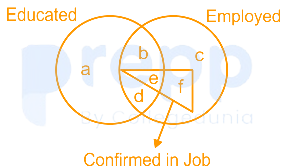
Read the given figure and find the region representing persons who are educated and employed but not confirmed in job.
The magazine in which Mahatma Gandhi mentioned what he wanted the Constitution to do is:
Which gas shields the surface of the earth from ultraviolet radiation from the sun?
Which event is marked as an Intangible Cultural Heritage of Humanity by UNESCO?
Who has been conferred with the rank of the Commander of the Order of the British Empire in 2018?


