
Which one of the following is a determinant of Organisational Climate or Culture (OC)?
Leadership style
Understanding Organisational Climate and Culture Determinants
Organisational Climate (OC) refers to the shared perceptions employees have about their work environment. It's often described as the "feel of the place". Organisational Culture, on the other hand, refers to the deeper shared values, beliefs, and assumptions that guide behaviour within an organisation. While distinct, climate and culture are closely related, with climate often seen as a manifestation of culture, and both being influenced by similar factors, known as determinants.
Determinants are the factors or influences that shape what the climate and culture of an organisation become. Identifying these determinants is crucial for managers and leaders looking to improve employee satisfaction, performance, and overall organisational effectiveness.
Analysing Potential Determinants of Organisational Climate or Culture
Let's look at the options provided and how they relate to being a determinant of Organisational Climate or Culture:
- Leadership style: The way leaders behave, make decisions, communicate, and interact with employees significantly impacts the work environment. Authoritative, democratic, or laissez-faire styles create vastly different climates and reinforce specific cultural norms. Leadership style is widely considered a primary and direct determinant of both climate and culture.
- Decision-making: Decision-making processes are certainly part of an organisation's climate and culture. However, the *way* decisions are made (e.g., centralized vs. decentralized, transparent vs. opaque) is often *shaped by* the leadership style and existing culture/climate, rather than being a primary determinant *of* it in the same fundamental way leadership is.
- Innovation and change: An organisation's ability to foster innovation and manage change is more of an *outcome* or a *characteristic* of its climate and culture, rather than a direct determinant. A climate that encourages risk-taking and learning from failure, for instance, supports innovation. This climate is, in turn, influenced by determinants like leadership style, structure, and communication.
- Trust: Trust among employees and between employees and management is a vital component of a healthy organisational climate. It's a perceived quality of relationships within the organisation. Like innovation and change, trust is often seen as a *feature* of a positive climate and culture, heavily influenced by leadership behaviour, fairness in processes, and communication transparency, which are among the determinants.
Why Leadership Style is a Key Determinant
Among the given options, Leadership style is the most fundamental determinant. Leaders set the tone, establish norms through their actions and policies, and directly influence employee perceptions of the work environment (climate) and reinforce underlying values (culture). Their approach impacts everything from communication patterns and decision-making styles to how innovation is encouraged and how trust is built.
For example, a leader who practices open communication and involves employees in decisions is likely to foster a climate of trust and participation. Conversely, a leader who is secretive and authoritarian may create a climate of fear and low trust.
Conclusion on Determinants of Organisational Climate
While decision-making processes, innovation and change, and trust are all crucial elements or outcomes related to Organisational Climate and Culture, Leadership style stands out as a key driving force and primary determinant that shapes these other aspects of the work environment.
Revision Table: Organisational Climate Determinants
| Concept | Relationship to Climate/Culture | Is it a Primary Determinant? |
|---|---|---|
| Leadership Style | Shapes perceptions, norms, and values directly through behaviour and policy. | Yes - Widely considered a core determinant. |
| Decision-making | A process influenced by climate/culture and leadership; contributes to the feel. | Less direct than leadership; often shaped *by* determinants. |
| Innovation and Change | An outcome or characteristic; enabled by a supportive climate/culture. | An effect, not a primary cause/determinant. |
| Trust | A characteristic or component of a positive climate/culture; built by other determinants like leadership, fairness, communication. | Less direct than leadership; often built *by* determinants. |
Additional Information: Other Organisational Climate Determinants
Beyond leadership style, other factors commonly identified as determinants of Organisational Climate and Culture include:
- Organisational Structure (e.g., hierarchical vs. flat)
- Communication Practices (e.g., open vs. closed)
- Reward Systems (e.g., performance-based vs. seniority-based)
- Policies and Procedures (e.g., flexibility, fairness)
- Physical Work Environment
- Nature of the work itself
All these factors, combined with leadership style, interact to create the unique feel and identity of an organisation.
Important Questions from Miscellaneous
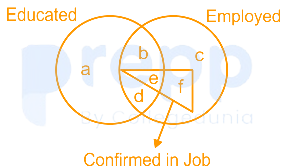
Read the given figure and find the region representing persons who are educated and employed but not confirmed in job.
The magazine in which Mahatma Gandhi mentioned what he wanted the Constitution to do is:
Which gas shields the surface of the earth from ultraviolet radiation from the sun?
Which event is marked as an Intangible Cultural Heritage of Humanity by UNESCO?
Who has been conferred with the rank of the Commander of the Order of the British Empire in 2018?


