
Which one of the following countries is NOT the member of the Shanghai Cooperation Organisation (SCO)?
Understanding the Shanghai Cooperation Organisation (SCO) Members
The question asks us to identify the country among the given options that is not a member of the Shanghai Cooperation Organisation (SCO). To answer this, we need to know which countries are currently members of the SCO.
What is the Shanghai Cooperation Organisation (SCO)?
The Shanghai Cooperation Organisation (SCO) is a Eurasian political, economic, and security alliance. It was founded in Shanghai on 15 June 2001 by six member states: China, Kazakhstan, Kyrgyzstan, Russia, Tajikistan, and Uzbekistan. Over the years, the organisation has expanded its membership.
Current SCO Member States
As of recent expansions, the full member states of the SCO include:
- China
- India
- Iran
- Kazakhstan
- Kyrgyzstan
- Pakistan
- Russia
- Tajikistan
- Uzbekistan
| Country | Membership Status |
|---|---|
| China | Member State |
| India | Member State |
| Iran | Member State |
| Kazakhstan | Member State |
| Kyrgyzstan | Member State |
| Pakistan | Member State |
| Russia | Member State |
| Tajikistan | Member State |
| Uzbekistan | Member State |
Analyzing the Given Options
Let's compare the provided options with the list of current SCO member states:
- China: China is a founding member of the SCO. So, China is a member.
- Pakistan: Pakistan became a full member of the SCO in 2017. So, Pakistan is a member.
- India: India also became a full member of the SCO in 2017. So, India is a member.
- Japan: Let's check if Japan is on the list of current SCO members. Japan is not listed among the full member states.
Conclusion on SCO Membership
Based on the list of current member states, China, Pakistan, and India are all members of the Shanghai Cooperation Organisation (SCO). Japan is not a full member state of the SCO.
Revision Table: SCO Countries
| Country | Is a Member of SCO? |
|---|---|
| China | Yes |
| Pakistan | Yes |
| India | Yes |
| Japan | No |
Additional Information about SCO
Besides full member states, the SCO also has Observer States and Dialogue Partners. These categories indicate different levels of engagement with the organisation's activities and goals.
- SCO Observer States: Afghanistan, Belarus, Mongolia.
- SCO Dialogue Partners: Azerbaijan, Armenia, Cambodia, Nepal, Sri Lanka, Turkey, Egypt, Qatar, Saudi Arabia, UAE, Myanmar, Maldives, Kuwait, Bahrain. Some of these partners might be seeking full membership in the future.
The primary goals of the SCO include strengthening mutual trust and neighbourliness among member states, promoting cooperation in politics, trade, economy, research, technology and culture, as well as efforts to maintain regional peace, security and stability.
Important Questions from Miscellaneous
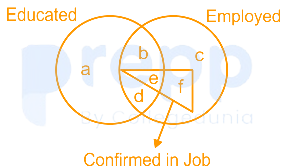
Read the given figure and find the region representing persons who are educated and employed but not confirmed in job.
The magazine in which Mahatma Gandhi mentioned what he wanted the Constitution to do is:
Which gas shields the surface of the earth from ultraviolet radiation from the sun?
Which event is marked as an Intangible Cultural Heritage of Humanity by UNESCO?
Who has been conferred with the rank of the Commander of the Order of the British Empire in 2018?


