
Which of the following sector’s activities do NOT produce any goods?
Tertiary sector
Understanding Economic Sectors: Goods vs. Services
The economy is broadly divided into different sectors based on the nature of activities performed. These sectors help us understand how economic activities are organized and how they contribute to the overall economy.
Let's look at the main sectors:
- Primary Sector: This sector involves activities directly extracting or harvesting natural resources. Examples include agriculture, forestry, fishing, mining, and quarrying. Activities in this sector produce raw materials, which are considered goods.
- Secondary Sector: This sector involves processing or manufacturing raw materials obtained from the primary sector into finished or semi-finished goods. Examples include manufacturing (producing cars, textiles, electronics), construction, and utility services (electricity, gas, water supply). Activities in this sector definitely produce goods.
- Tertiary Sector: This sector, also known as the service sector, provides services rather than producing tangible goods. It includes a wide range of activities that support the primary and secondary sectors or directly serve consumers. Examples include banking, insurance, transport, communication, education, healthcare, trade, tourism, and administration. Activities in this sector produce services, which are intangible.
Identifying the Sector Without Goods Production
The question asks which sector's activities do NOT produce any goods. Based on the definitions:
- The Primary sector produces raw goods.
- The Secondary sector produces manufactured goods.
- The Tertiary sector provides services, which are not tangible goods.
Therefore, the Tertiary sector is the one whose activities do not produce any goods.
| Economic Sector | Nature of Activity | Produces Goods? | Examples |
|---|---|---|---|
| Primary | Extraction of natural resources | Yes (Raw Materials) | Agriculture, Mining, Fishing |
| Secondary | Processing/Manufacturing | Yes (Finished/Semi-finished) | Manufacturing, Construction |
| Tertiary | Providing Services | No (Produces Services) | Banking, Education, Transport |
Revision Table: Key Economic Sectors
| Sector | Focus | Output |
|---|---|---|
| Primary | Natural Resources | Raw Goods |
| Secondary | Manufacturing | Manufactured Goods |
| Tertiary | Services | Services |
Additional Information on Service Sector Activities
The tertiary sector plays a crucial role in modern economies, often contributing the largest share to the Gross Domestic Product (GDP) in developed countries. Its growth is often seen as a sign of economic advancement. While it doesn't produce physical goods, the services provided are essential for the functioning of other sectors and the well-being of the population. Services are consumed at the point of production and cannot be stored or traded like goods.
Important Questions from Miscellaneous
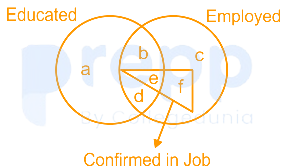
Read the given figure and find the region representing persons who are educated and employed but not confirmed in job.
The magazine in which Mahatma Gandhi mentioned what he wanted the Constitution to do is:
Which gas shields the surface of the earth from ultraviolet radiation from the sun?
Which event is marked as an Intangible Cultural Heritage of Humanity by UNESCO?
Who has been conferred with the rank of the Commander of the Order of the British Empire in 2018?


