
Which of the following is NOT Correct?
Backward (upstream) vertical integration occurs when original company merges or acquires a company to secure direct finance.
Integration Types: Identifying the Incorrect Statement
This question requires us to identify the statement that is NOT correct concerning various business integration strategies. We need to carefully examine the definitions provided for each type of integration.
Defining Horizontal Integration
Option 1 correctly defines Horizontal Integration. This strategy involves a company merging with or acquiring competitors that operate at the same stage of the value chain or in the same industry. The goal is often to increase market share, reduce competition, or achieve economies of scale. For example, one restaurant chain buying another.
Defining Vertical Integration
Option 2 accurately describes Vertical Integration. This occurs when a company expands into different stages of its production process or supply chain. It can involve developing operations internally or acquiring other companies involved in the supply chain, either upstream (suppliers) or downstream (distributors/customers).
Defining Diagonal Integration
Option 3 presents a reasonable description of Diagonal Integration (sometimes called lateral diversification). It involves expanding into a related service or industry that might complement the existing business but isn't necessarily part of the direct supply chain. The example of a travel business entering a related service, like hospitality or tour operations, fits this concept.
Analyzing Backward Vertical Integration
Option 4 states that Backward (upstream) vertical integration occurs when a company merges or acquires another company to secure direct finance. This statement is incorrect.
Let's break down why:
- Backward Vertical Integration specifically refers to a company taking control of operations that are earlier in its supply chain. This means acquiring or merging with suppliers of raw materials, components, or services necessary for the company's primary production process.
- The main objectives of backward integration are typically to gain greater control over the supply of inputs, reduce production costs, ensure the quality of raw materials, and enhance supply chain efficiency.
- While acquiring another company can sometimes improve financial leverage or access to capital, the primary strategic driver for backward integration is operational control over the supply side, not directly securing finance. Finance is generally obtained through different means like loans, equity, etc.
Identifying the Incorrect Statement
The core purpose of backward vertical integration is related to controlling the supply chain and production inputs. The statement in Option 4 misrepresents this primary goal by focusing on securing finance. Therefore, Option 4 is the statement that is NOT correct.
Important Questions from Miscellaneous
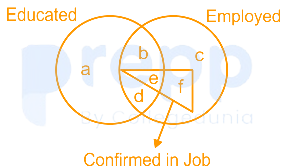
Read the given figure and find the region representing persons who are educated and employed but not confirmed in job.
The magazine in which Mahatma Gandhi mentioned what he wanted the Constitution to do is:
Which gas shields the surface of the earth from ultraviolet radiation from the sun?
Which event is marked as an Intangible Cultural Heritage of Humanity by UNESCO?
Who has been conferred with the rank of the Commander of the Order of the British Empire in 2018?


