
Which of the following is an INCORRECT statement concerning public goods?
Consumption of public goods by people is rivalrous in nature.
Understanding Public Goods: Key Characteristics
Public goods are a specific type of good in economics that possess two main characteristics: non-excludability and non-rivalry. Understanding these characteristics is crucial to identify correct and incorrect statements about public goods.
What are Public Goods?
A public good is a commodity or service that is made available to all members of society. Typically, these goods are administered by the government or collectively owned.
- Non-excludability: This means it is difficult or impossible to prevent individuals who have not paid for the good from consuming it or benefiting from it. For example, national defense protects everyone in the country, regardless of whether they pay taxes.
- Non-rivalry: This means that one person's consumption of the good does not reduce the amount available for others to consume. For example, one person enjoying the benefit of street lighting does not diminish the ability of others to also benefit from the same light.
Analyzing Statements about Public Goods
Let's examine each statement provided in the options concerning public goods:
-
Statement 1: It is not easy to collect fees for public goods from every individual.
This statement is correct. This difficulty in collecting payment is a direct consequence of the non-excludability characteristic. Since you cannot easily prevent people from benefiting, it's hard to charge everyone, leading to the 'free-rider' problem.
-
Statement 2: Usually, public goods are provided by the government.
This statement is also generally correct. Due to the free-rider problem caused by non-excludability and the fact that private firms may find it unprofitable to provide goods that are non-rivalrous and non-excludable, governments often step in to provide public goods using tax revenue.
-
Statement 3: Consumption of public goods by people is rivalrous in nature.
This statement is incorrect. Public goods are characterized by non-rivalry in consumption. Rivalry means that one person's use of the good prevents another person from using it or diminishes the benefit they receive (like eating a slice of pizza). For a public good, like clean air or a public park (when not overcrowded), one person enjoying it does not stop others from enjoying it simultaneously.
-
Statement 4: Public goods are non-excludable in nature.
This statement is correct. As discussed earlier, non-excludability is a defining characteristic of public goods. It means it is difficult to exclude people from benefiting from the good, even if they haven't paid for it.
Based on the analysis, the statement that is INCORRECT concerning public goods is the one claiming their consumption is rivalrous in nature.
Therefore, the incorrect statement is: Consumption of public goods by people is rivalrous in nature.
| Characteristic | Definition | Public Good | Private Good |
|---|---|---|---|
| Rivalrous | One person's consumption prevents another's. | No (Non-rivalrous) | Yes |
| Excludable | Can prevent people from consuming if they don't pay. | No (Non-excludable) | Yes |
Revision Table: Public Goods Summary
| Characteristic | Explanation | Implication |
|---|---|---|
| Non-rivalrous | Consumption by one does not reduce availability for others. | Marginal cost of allowing one more person to consume is zero. |
| Non-excludable | Cannot easily prevent non-payers from consuming. | Leads to the free-rider problem; difficult for private firms to profit. |
Additional Information: Types of Goods
Besides public goods and private goods (which are rivalrous and excludable), economics also identifies other types of goods:
- Club Goods: These are excludable but non-rivalrous (e.g., cable TV, membership to a private park). Consumption is non-rivalrous up to a point, but access can be restricted.
- Common Resources: These are rivalrous but non-excludable (e.g., fish in the ocean, congested non-toll roads). Consumption by one person reduces the amount available for others, but it's hard to exclude people from using the resource. This often leads to the "tragedy of the commons."
Understanding the four classifications of goods helps in analyzing different market failures and the potential roles of government intervention.
Important Questions from Miscellaneous
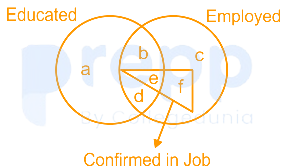
Read the given figure and find the region representing persons who are educated and employed but not confirmed in job.
The magazine in which Mahatma Gandhi mentioned what he wanted the Constitution to do is:
Which gas shields the surface of the earth from ultraviolet radiation from the sun?
Which event is marked as an Intangible Cultural Heritage of Humanity by UNESCO?
Who has been conferred with the rank of the Commander of the Order of the British Empire in 2018?


