
Which of the following factors restrain Globalization? A. International economic integration B. Nationalism C. Emerging trade barriers D. Regulatory controls E. Move towards free marketing systems Choose the correct answer from the options given below:
B, C and D only
Understanding Factors Affecting Globalization
Globalization refers to the increasing interconnectedness and interdependence of the world's economies, cultures, and populations, brought about by cross-border trade in goods and services, technology, and flows of investment, people, and information. Various factors can either promote or restrain this process. The question asks us to identify the factors that restrain, or hinder, globalization.
Analyzing Potential Restraints on Globalization
Let's examine each of the listed factors to determine whether they encourage or restrain globalization:
- International economic integration (A): This involves the merging of national economies into regional or global economic systems, often through trade agreements, common markets, and financial cooperation. This process inherently facilitates the flow of goods, services, capital, and labour across borders. Therefore, international economic integration promotes globalization, rather than restraining it.
- Nationalism (B): Nationalism emphasizes national identity and interests, often leading to policies that prioritize domestic concerns over international cooperation. This can manifest as protectionist trade policies, restrictions on immigration, or withdrawal from international agreements, all of which can hinder the free movement of goods, people, and capital essential to globalization. Thus, nationalism acts as a restraint on globalization.
- Emerging trade barriers (C): Trade barriers include tariffs, quotas, subsidies, and other measures that restrict or impede international trade. When countries implement new trade barriers or increase existing ones, it becomes more difficult and expensive for goods and services to cross borders. This directly counteracts the principles of free trade that drive much of globalization. Therefore, emerging trade barriers restrain globalization.
- Regulatory controls (D): Differences in national regulations concerning product standards, labour practices, environmental rules, financial markets, and other areas can create significant challenges and costs for businesses operating internationally. Complex or restrictive regulatory environments can act as non-tariff barriers to trade and investment, making cross-border activities more difficult. Hence, regulatory controls can restrain globalization.
- Move towards free marketing systems (E): Free market systems are characterized by minimal government intervention in the economy, allowing prices and production to be determined by supply and demand. A global move towards free marketing systems generally involves the reduction of state controls, deregulation, and privatization, which typically facilitate international trade and investment flows. This promotes globalization, rather than restraining it.
Identifying the Restraining Factors
Based on the analysis, the factors that restrain globalization are:
- Nationalism (B)
- Emerging trade barriers (C)
- Regulatory controls (D)
Factors A and E, international economic integration and a move towards free marketing systems, actually promote globalization.
Conclusion on Globalization Restraints
The factors listed that actively work against or slow down the process of globalization are nationalism, the introduction or increase of trade barriers, and differing or complex regulatory controls across nations.
Therefore, the correct combination of factors that restrain Globalization is B, C, and D.
| Factor | Impact on Globalization |
|---|---|
| International economic integration | Promotes |
| Nationalism | Restrains |
| Emerging trade barriers | Restrains |
| Regulatory controls | Restrains |
| Move towards free marketing systems | Promotes |
Revision Table: Globalization Factors
| Factor Type | Examples | Effect on Globalization |
|---|---|---|
| Promoting Factors | Technological advancements, Reduced communication costs, Improved transportation, International trade agreements, Free trade areas, Multinational corporations, Liberalization of financial markets | Increases cross-border flows of goods, services, capital, information, and people, leading to greater interconnectedness. |
| Restraining Factors | Trade barriers (tariffs, quotas), Protectionism, Nationalism, Geopolitical tensions, Regulatory differences, Cultural differences, Anti-globalization movements, Economic recessions | Hinders or limits cross-border flows, leading to reduced interconnectedness and integration. |
Additional Information: Forces Shaping Globalization
Globalization is a dynamic process shaped by a push and pull of various forces. Understanding these forces provides deeper insight into why globalization accelerates or slows down at different times. Promoting forces often relate to advancements in technology, communication, and transportation, as well as political decisions favouring open borders and free trade. Conversely, restraining forces often stem from political considerations like national security, protection of domestic industries, cultural preservation, or responses to perceived negative impacts of globalization, such as job losses or increased inequality. Geopolitical stability or instability also plays a significant role; conflicts and political tensions can severely disrupt global trade and investment flows, acting as powerful restraints on globalization.
Moreover, domestic policies that are not explicitly aimed at restricting international trade but create complex bureaucratic procedures or stringent compliance requirements can unintentionally act as regulatory controls that restrain globalization for businesses attempting to operate internationally. The balance between these promoting and restraining forces determines the pace and direction of globalization at any given time.
Important Questions from Miscellaneous
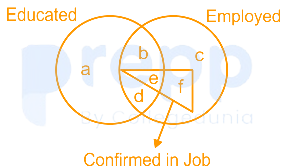
Read the given figure and find the region representing persons who are educated and employed but not confirmed in job.
The magazine in which Mahatma Gandhi mentioned what he wanted the Constitution to do is:
Which gas shields the surface of the earth from ultraviolet radiation from the sun?
Which event is marked as an Intangible Cultural Heritage of Humanity by UNESCO?
Who has been conferred with the rank of the Commander of the Order of the British Empire in 2018?


