
Which among the given facts became the primary reason for the leave of E.V. Ramaswami from Indian National Congress?
conflict with M.K. Gandhi
This question asks about the main reason why E.V. Ramaswami, also known as Periyar, left the Indian National Congress (INC). Understanding the historical context and the key figures involved is crucial.
Understanding E.V. Ramaswami's Role and INC Departure
E.V. Ramaswami was a prominent social reformer and politician from Tamil Nadu who was initially a member of the Indian National Congress. However, he eventually distanced himself from the party and founded the Self-Respect Movement. His departure was a significant event in India's political and social history.
Analyzing the Factors for E.V. Ramaswami's Resignation
Several issues contributed to Periyar's dissatisfaction with the Congress. Let's examine the options provided:
- Conflict with M.K. Gandhi: There were fundamental differences in ideology and approach between E.V. Ramaswami and Mahatma Gandhi, particularly concerning social issues like caste and the pace of social reform. Periyar felt that Gandhi's methods and compromises were not radical enough to address the deep-rooted inequalities in Indian society.
- Crisis in Seranmahadevi Charity Training Centre: This incident, occurring around 1924, involved the refusal to admit 'untouchables' into the common dining hall during a training camp for backward class candidates. Periyar strongly opposed this segregation. The Congress leadership's response, which Periyar found inadequate and compromising on principles of equality, deeply disappointed him and highlighted the party's internal struggles with caste discrimination.
- Congress Ideology: While Periyar's own ideology evolved towards rationalism and social justice, his departure wasn't solely due to a general disagreement with the Congress ideology itself, but rather how that ideology was interpreted and implemented, especially concerning social reforms.
- Communal Disparity in Congress: This relates closely to the Seranmahadevi incident. Periyar perceived a disparity within the Congress based on caste lines, believing the party did not effectively challenge or dismantle the prevailing caste system and its discriminatory practices.
Identifying the Primary Reason
The crisis at the Seranmahadevi training centre exposed the deep divisions within the Congress regarding caste and social equality. E.V. Ramaswami viewed the Congress leadership's handling of this issue, particularly Mahatma Gandhi's stance, as a failure to uphold principles of social justice. This led to a significant disillusionment and a direct conflict with Gandhi's leadership and philosophy on how to tackle social reform within the party structure. While the Seranmahadevi incident and communal disparity were critical factors, the fundamental disagreement and resulting conflict with M.K. Gandhi over these issues is often cited as the primary catalyst for Periyar's eventual resignation from the INC. He felt that the party, under Gandhi's dominant influence, was not committed enough to eradicating caste-based inequalities.
Important Questions from Miscellaneous
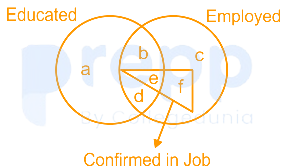
Read the given figure and find the region representing persons who are educated and employed but not confirmed in job.
The magazine in which Mahatma Gandhi mentioned what he wanted the Constitution to do is:
Which gas shields the surface of the earth from ultraviolet radiation from the sun?
Which event is marked as an Intangible Cultural Heritage of Humanity by UNESCO?
Who has been conferred with the rank of the Commander of the Order of the British Empire in 2018?


